


US-Portugal relations – thriving, dynamic, resilient…and sometimes messy
Text: Chris Graeme; Photos: Chris Graeme/AmCham Portugal
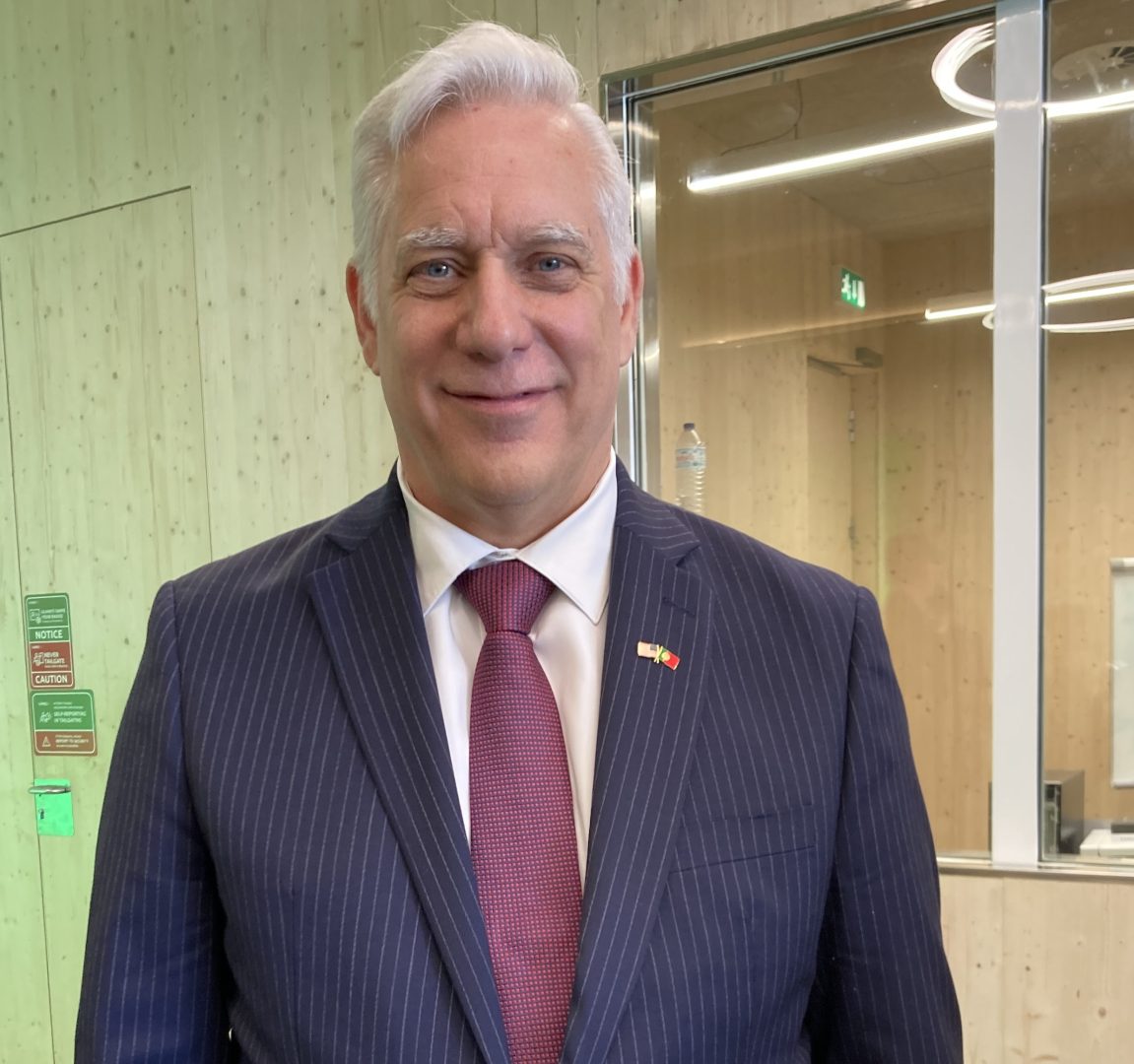
When diplomat Douglas Koneff, the Charge d’affaires at the US Embassy in Lisbon first started out on his diplomatic career he was given one piece of advice that has stood him in good stead.
“Build one good friendship, not 100 acquaintances or 1,000 business cards. Just one real and honest friendship.”
That’s because when things get tough, it’s the one relationship that might very well see you through.
“It can help you find your way, open doors, and remind you why you are in the job in the first place,” Douglas Koneff told business leaders who attended the 5th American Chamber Of Commerce in Portugal ‘Transatlantic Business Summit’ in Lisbon on Friday, January 30.
The diplomat’s first job was at the US consulate in Heroica Matamoros, Mexico, right across the US border at Texas and the town of Brownsville.
It was not, he recalls, the “prettiest place in the world” in fact “it was pretty rough and sometimes violent”, but there were a “lot of hard-working people there just trying to make a living”.
Doug’s main job was to provide services for and protect US citizens. A year into his posting and just before Christmas, he got a “bad call”.
“I remember it was a Monday. A retired California fireman and his wife, both grandparents, were on their way to Florida to see their grandchildren. On the way, they were driving their mobile home and they decided to cross into Matamoros to get some Christmas presents for their grandchildren.
When they crossed into Mexico, their mobile home was searched by customs agents who discovered some shotgun shells. It turned out that this fireman liked to go hunting every once in a while, and these were a few leftover pieces of ammunition.
Unfortunately, that’s illegal in Mexico. He was arrested, he was placed in jail, his mobile home was confiscated, and his wife was desperate. Fortunately, I had one real honest relationship with the local Mexican prosecutor”, recalled Doug.
Now the young diplomat had invested a lot of time and effort into getting to know this guy, and now he needed him. How could he convince him and the judge that this retired firefighter wasn’t trying to smuggle guns into Mexico? That he should not spend the next two-to-four years in jail?
That it was an honest mistake, and he and his wife should be allowed to go free and spend Christmas with their grandchildren. “I called in all my chips on that one”.
Fortunately his friend, the prosecutor, believed him and he came through. It didn’t happen overnight, but they were able to get the grandfather released.
Portugal and the US – It’s about trust
The investment that Doug had made in that one relationship paid off and helped a desperate person in need. That lesson has stuck with him, and he applies it everywhere he goes. And it’s really the perfect way to think about the US-Portugal relationship. It’s not just about treaties or trade statistics; It’s about trust, it’s about shared values, and it’s about the kind of partnership that stands the test of time”, said Douglas Koneff describing the current state of the US-Portugal relationship, and trading relationship more specifically, that has grown from a few hundred thousand dollars in 1951 to over €11Bn bi-laterally today.
In his closing speech at the Gulbenkian in the year that marks the 75th anniversary of the American Chamber of Commerce in Portugal – AmCham Portugal – Douglas reminded that “we live in a world where headlines love to focus on division and drama.
If you only read the news, you might think that the transatlantic relationship was on shaky ground.
But let’s be honest, that’s not the real story. Here’s the truth. Our relationship is thriving. It’s dynamic, it’s resilient, and yes, sometimes it’s messy. Sometimes it’s really messy, just like any great partnership. But it’s also full of opportunity, innovation, and mutual respect”, he said.
US-Portugal success stories
Douglas Koneff then proceeded to lay out some examples of how the EU-US and Portugal-US relationship had demonstrated this spirit of cooperation and resilience.
“Take for example the digital world. There’s a running joke that America thinks Europe regulates every swipe, while Europeans think that Americans get all their news from TikTok. What’s the reality? Well, it’s that we’re both a lot more sophisticated and more connected than these stereotypes would suggest. Our partnership is not only surviving, but it’s booming, and we can make it even stronger”, he said.
For nearly 250 years, since Portugal recognised US independence, both countries have worked together to “promote prosperity, security, and freedom. The freedom to innovate, the freedom to grow, and to dream big. And we’re still doing it”.
The example was Start Campus in Sines, a mega-data centre project south of Lisbon developed with US investment.
With support from Portugal’s overseas investment bureau AICEP and as one of Portugal’s projects of national interest, this data center is set to become one of the largest in Europe.
“When all six buildings are complete, Start Campus will have as much capacity as all of Spain’s data centers combined. “That’s not just impressive, that’s transformative”, said Douglas Koneff.
In the area of healthtech, consider Sword Health, a company that started in Portugal, opened its first US office in New York in 2018, and is now valued at $US4Bn, with 1,300 jobs created in the US and in Portugal.
Sword is using AI to revolutionise healthcare, making world-class care more accessible and more affordable. “With a new global AI hub in Porto, they’re proving that innovation knows no borders”.
Bi-lateral investment – a two-way street
And the flow of investment goes both ways. Last year, Portuguese companies like Hovione, TMG (Automotive) Group, Intraplás, and Sodexo invested over US$300 million in the United States, creating hundreds of jobs from South Carolina to Ohio.
Meanwhile, American companies continue to generate and support tens of thousands of high-quality jobs in Portugal This strong trade and commercial bond extends beyond emerging technology and to traditional sectors as well.
Take tourism for example. Last year, US tourists and Portugal broke records again with over 2.5 million US visitors spending around €3Bn according to official statistics.
“Almost every visitor packs a can of sardines with them when they leave. By my maths, that’s about €10 million in fish, olive oil, and nostalgia. So, Portugal really does leave its mark both on the heart and on the stomach”, he said.
That momentum is growing. In 2024 alone, Portuguese companies announced greenfield investments in the US worth US$2.3Bn. Companies like the energy producer EDP that has invested more than US$20Bn into the United States and plans to invest several billion more. “The transatlantic conversation really matters and EDP is in North America to stay despite the inevitable ups and downs”, the diplomat confirmed.
“On our side, the United States has become, and will remain, I predict, the largest non-EU investor in Portugal. That’s a vote of confidence in Portugal’s economy and in the strength of our relationship.
Our countries are also taking steps to make our collaboration even more effective. Earlier this month, we agreed to launch the US-Portugal CEO Forum, a new platform for private sectors to talk directly to government and talk about tough issues, from regulations to market access, the kind of things that are obstacles to greater investment.
It’s exactly the kind of dialogue that we need today to stay at the forefront of emerging sectors like AI, advanced manufacturing, and digital infrastructure.
Of course, there are challenges. We know that over-regulation and red tape can stifle innovation. We know that fair competition and research security are essential, especially as we face new threats from actors who don’t share our values” he remarked.
Portugal’s universities – a treasure trove of talent
Just like in the United States, Portugal’s universities are a treasure trove of talent and ideas. “I’ve been to many of them. We must protect them, just as we protect our critical infrastructure from untrusted vendors.
We also recognize the importance of defence. Portugal’s commitment to invest in its own security is not just about NATO. It’s about creating high-paying jobs and driving innovation here at home” stressed Douglas Koneff.
Investing in stronger defence and technology, like fifth-generation fighter jets, show how alliances can share both security and prosperity. “Sometimes our cooperation is quiet, but vital. In Venezuela, the United States is very much aware of nearly half a million Portuguese citizens and their families that live there. We congratulate the Portuguese government for the release of political prisoner and Portuguese citizen, Carla da Silva.
“As needed, we will find ways to support the Portuguese government in these challenges. That’s the kind of partnership you don’t see on the evening news, but it’s the kind of partnership that matters when people need it. As Portugal pursues its vision of becoming a digital and innovation hub, the United States stands ready to support you. We want to power your ambitions, create jobs, and secure the future together” affirmed Douglas Koneff, the Charge d’affaires at the US Embassy in Lisbon