



More than half of Portuguese workers are dissatisfied with their benefits package
A study by the Portuguese startup Coverflex has revealed that 50% of workers are dissatisfied with their benefits package.
According to “The State of Compensation in Portugal 2026,” an annual study that analyses how Portuguese workers perceive their compensation and benefits, and the direct impact on job satisfaction, financial well-being, and willingness to remain with the company, it was clear that half (48%) of the participants are dissatisfied with their salary, as well as with the benefits package (46.1%).
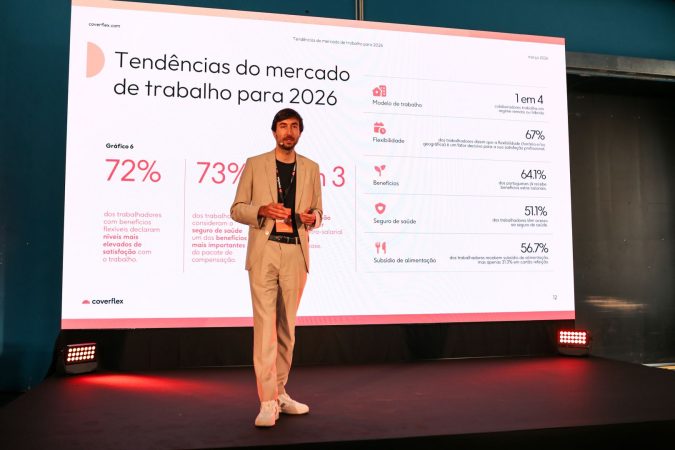
Two-thirds of the population (64.1%) already receive extra-salary benefits – on average, they report receiving between €101 and €200 in benefits per month.
Based on a representative sample of the employed population in Portugal, the study reveals that compensation has a direct impact on well-being and talent retention, and goes far beyond salary: it’s about fairness, recognition, and quality of life.
Looking at the benefits most offered by companies, health and well-being expenses lead the table with health insurance (24.6%), personal accident insurance (24.6%), discounts (21%), fuel support (22.8%) and telecommunications packages (20.3%).
Although in general these are also the most desired benefits by workers (especially health insurance), the point of greatest discrepancy is the offer of savings and retirement plans – offered at 13.8% compared to 21.8% willing to obtain this service.
The lack of choice is another major source of dissatisfaction among respondents – almost a third (26% to 27%) express displeasure with the degree of influence and involvement when planning benefits. It is clear, therefore, that the business sector must move towards greater autonomy in this field, offering a range of options instead of a “fixed” and equal benefits package for everyone.

Benefits as a Stress Buffer and Happiness Generator
The study data shows that compensation continues to play a central role in the relationship between workers and companies. Although many employees reveal reasonable levels of job satisfaction, more than half indicate that there is room for greater satisfaction with their compensation package, not only in terms of salary but also regarding the availability of benefits, perception of fairness, and suitability to individual needs.
73% of respondents stated that they felt stressed in the three days prior to participating in the study, with the highest values (76%) reflecting workers who are dissatisfied with their compensation.
Looking at happiness levels, an inversely proportional picture emerges: of the 64% of people who were happy in the three days prior to the study, the overwhelming majority (81%) are satisfied with their compensation.
The study indicates a clear relationship between compensation and stress. Among workers dissatisfied with their compensation package, 76% say they felt stressed in the three days prior to the study, a higher value than that recorded among those who are satisfied. The way companies structure and communicate compensation can therefore have a direct impact on well-being at work.
Looking at the benefits most offered by companies, health and well-being expenses lead the table with health insurance (24.6%), personal accident insurance (24.6%), discounts (21%), fuel support (22.8%) and telecommunications packages (20.3%).
Although in general these are also the most desired benefits by workers (especially health insurance), the point of greatest discrepancy is the offer of savings and retirement plans – offered at 13.8% compared to 21.8% willing to obtain this service.
The lack of choice is another major source of dissatisfaction among respondents – almost a third (26% to 27%) express displeasure with the degree of influence and involvement when planning benefits.
It is clear, therefore, that the business sector must move towards greater autonomy in this field, offering a range of options instead of a “fixed” and equal benefits package for everyone.
Benefits as Financial Security
The results show that benefits with a direct impact on the monthly budget can play an important role in the financial well-being of workers. This is the main conclusion of this chapter, revealing that less than half (43.9%) of participants consider that they “have enough money for everything they need”. Those who are more satisfied with their compensation show higher financial well-being (68.9%) than those who are dissatisfied.
Benefits as a Talent Retention Tool
The study identifies a misalignment between what people value and what companies offer – half (52.6%) of respondents say they are dissatisfied with their current compensation package.
This reality is also evident when we analyze the size of the companies: the larger the company, the lower the satisfaction with compensation. This may be due to the expectation of more robust and flexible compensation packages.
The study shows that flexibility, recognition of people, and personalization of compensation have a direct impact on satisfaction, well-being, and the intention to remain with the company. Data indicates that workers with access to more comprehensive benefits packages tend to report higher levels of job satisfaction and a greater intention to remain with the company.
The study shows that compensation is increasingly linked to work experience and talent retention in companies. As organizations continue to develop more flexible, transparent, and personalized models, the opportunity to strengthen employee well-being and company competitiveness also grows.

Benefits as a tool for pay equity
Men are, on average, slightly more satisfied with their compensation than women (5.26 vs. 4.7), reflecting the fact that women earn less.
The analysis confirms that women report, on average, lower incomes than men, concentrating in lower income brackets. The study underlines that pay equity is not just a matter of image or credibility: it directly affects satisfaction and talent retention. Transparent salary bands and regular audits are essential to reduce inequality and perceived injustice.
“There are very positive signs of evolution in compensation practices in Portugal, with more and more companies integrating benefits into their salary packages,” says Inês Odila, Country Manager of Coverflex in Portugal. “At the same time, it is clear that there is still room to continue evolving, making compensation packages more complete, flexible and adapted to the different stages of people’s lives. When companies manage to structure and communicate this value proposition well, the impact on employee satisfaction and retention is significant.”

Summary
In summary, although some services are widely disseminated, such as meal allowances, there is still a long way to go for companies to align their compensation packages with employee expectations.
Health insurance, salary flexibility, long-term incentives, and flexible benefits models continue to have relatively limited adoption, although they are clearly valued by workers, highlighting an opportunity for organizations to continue evolving their compensation practices.
More than the value of the salary in isolation, what most influences employee satisfaction is how the compensation package is perceived as a whole. More complete and well-structured benefits packages are associated with greater well-being, greater job satisfaction, and a greater willingness to remain with the organization.
In a nutshell the study found:
More than half of Portuguese workers dissatisfied with the benefits package.
Seven in 10 workers with flexible benefits report higher levels of job satisfaction.
Less than half of workers feel financially secure.
Two-thirds of the population receives extra-salary benefits, with average values between €101 and €200 per month.
89% of people receive food subsidies, but only 48.9% receive a meal card.
73% of workers consider health insurance important in their compensation package.
A third of workers express a desire to have more decision-making power and personalize their benefits package.

Source and photos: Coverflex