


Government highlights seven mega data centres “in preparation” in Portugal
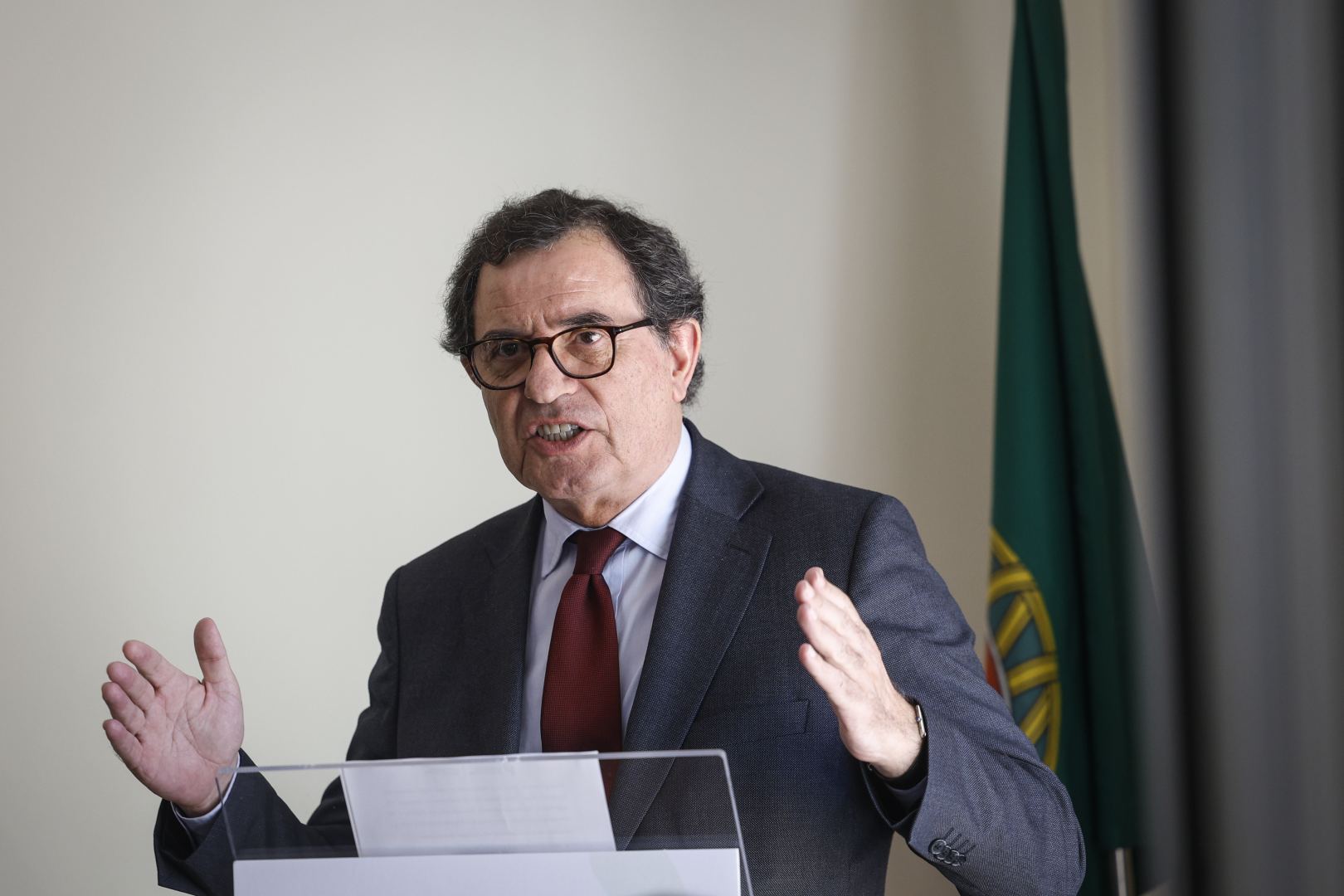
Portugal’s Minister for Territorial Cohesion, Manuel Castro Almeida highlighted seven new Sines-style mega data centre and allied projects up and down the country this week.
Portugal has attracted more than €25Bn to Sines, south of Lisbon for industrial projects. It represents is a huge investment which is more than the Recovery and Resilience Plan (RRP), the Portugal Transformation and Resilience Plan (PTRR) or PT 2030 European funding.
The projects from these investments must all be completed within a tight deadline by the beginning of the next decade. Ambitious, especially considering that the government has no plan to accommodate these projects.
“There is no such plan, but we are working on it. We’re all aware that we need to make this plan,” said Manuel Castro Almeida in an interview with Jornal Económico.
“Sines cannot just be a cluster of factories. People live and work there, workers who have families and need their children in school, need doctors and supermarkets.
We need to have water and sanitation infrastructure networks that are adequate for the size of a population that is growing and will continue to grow,” he said.
“I have already spoken with the mayor of Sines, who is fully aware of the need to create this plan. He is very interested in having this plan involve various state departments,” he explained.
These are growing pains. Sines is a success and is reaching its capacity. There are no longer any serviced plots to install a large company.
“It has proven to be a useful idea, it has an extraordinary location. A few decades ago it was considered a white elephant, but in the end, it wasn’t an elephant, nor was it white,” said Manuel Castro Almeida.
The solution to the shortage is not expansion, but replicating the model. “We will now prioritise creating other Sines across the country,” said Castro Almeida.
The idea is to create two medium or large business incubation areas in the north of the country – one on the coast, the other inland – plus two in the central region – one on the coast, the other inland – plus one in the Lisbon and Tagus Valley region, and another in the interior Alentejo, because the coastal Alentejo already has Sines.
“They will not be areas the size of Sines, that doesn’t exist,” he warned. The Sines Industrial and Logistics Zone (ZILS) covers 4,157 hectares, or 41.57 square kilometres. Approximately 3,306 hectares are designated for industrial and logistics activities, with the remainder occupied by infrastructure, environmental areas, protection corridors, and other uses.
The area under direct management by AICEP Global Parques is approximately 2,375 hectares.
There will be six new, medium or large, business reception areas. The minister points to between three and eight square kilometers, therefore between 300 and 800 hectares. “These are already considerable areas, but the country needs them because we can’t have a situation in which there are foreign companies wanting to set up in Portugal and don’t have areas of the necessary size properly infrastructured,” added Manuel Castro Almeida.
“I would rather be accused of having the areas ready and unoccupied than have to say that we cannot welcome this or that company because we do not have an area of the necessary size with proper infrastructure,” he continued.
These new areas have funding foreseen in the PTRR. The location of each one will be studied by the CCDR [Regional Coordination and Development Commissions], in conjunction with the inter-municipal communities and the new PTRR agency, which will start operating shortly.
The CCDR will have a key role, as they will have to in Sines. “It is inconceivable to create a business area in the middle of a desert, with nothing around it. There have to be houses, there have to be conditions for people to live there as well,” says Castro Almeida. “There has to be integrated planning and for that, no one is better than the regional coordination and development commissions,” he argued.
Source: Jornal Económico, Credits: ANTÓNIO PEDRO SANTOS/LUSA
Copyright: © 2026 LUSA – Agência de Notícias de Portugal, S.A.