


Portugal exports €79.3Bn supported by global logistics networks
Portuguese exports reached €79.3 billion in 2025, reflecting the growing role of international connectivity in supporting the country’s economic performance.
From road, maritime and air transport to increasingly integrated logistics networks, efficient supply chains are helping Portuguese companies reach customers across global markets.
As geopolitical shifts reshape international trade routes, Portugal is strengthening its position as a strategic gateway connecting Europe, the Americas and Africa, supported by modern infrastructure and strong multimodal connectivity.
The conflicts in Ukraine, Iran and the Strait of Hormuz have demonstrated the fragility of certain supply chains and the need for reliable logistics networks to keep international trade moving by sea, road and rail.
It is within this context that Portugal is establishing itself as Europe’s Atlantic logistics platform.
Europe’s Atlantic Logistics Platform
In 2023, Portugal ranked 38th in the World Bank’s Logistics Performance Index, which last year revised its methodology with Portugal being well-placed in the index with 126 economies accessible through direct air cargo connections, 60 accessible by sea, and 127 by post.
The Port of Sines is, in this context, a strategic pillar in Portugal’s positioning as a logistics hub. It handles the largest volume of cargo and is the country’s main energy supply gateway through which a significant share of oil, petroleum products and natural gas is imported.
Alongside the port, the surrounding industrial and logistics area covers over 2,000 hectares while it is an entry and export point for international submarine cables, as well as the location for the development of data centres such as Start Campus.
In July 2025 the Portuguese government announced the Port 5+ plan which foresees €4Bn in investment to reduce port emissions by around 80% by 2035 through electrification, alternative fuels and energy efficiency, and to modernise and digitalise the national port system.
In Sines this includes the expansion of the Sines XXI Terminal and the launch of the new Vasco da Gama Terminal and road and rail logistics networks.
However, Portugal needs to continue strengthening its position as a logistics hub by improving intermodal connectivity and coordination between ports, rail and road, as well as accelerating the incorporation of digitalisation, Internet of Things (IoT) and automation.
Growth in logistics platform demand
The growth of e-commerce has also increased demand for warehouses and logistics centres in Portugal, particularly in Lisbon and Porto.
According to the ‘CBRE – Portugal Logistics Confidence Index 2025’, most operators expect to increase their investment and storage capacity in the coming years.
Road transport is the most widely used method of transportation by Portuguese companies to transport their goods, accounting for 62.8% of goods exported, an increase of 2.8% compared to 2024.
That means of the €79,350 million in goods exported last year, €49,805 million were transported by road.
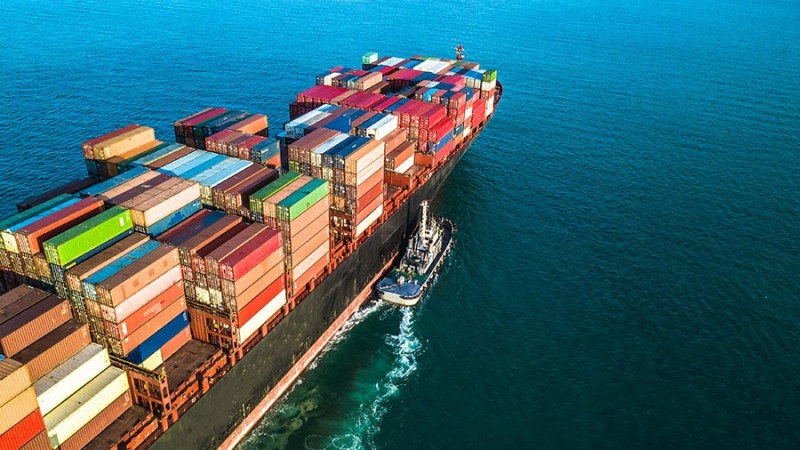
This is followed by maritime transport, used in 2025 for 24% of goods exports, totalling €19,001 million, and air transport with 7.1% of goods exports, or €5,660 million in 2025.
Rail transport lags far behind it – it has the greatest potential for growth but is the least used by companies with only 0.6% of exported goods and falling from €630 million in 2024 to €451 million last year, a decline of 28.4%.
Imports show a similar pattern. Road transport (61.4%) and maritime transport (23.3%) dominate.
This is followed by air transport (4.3%), which recorded the highest growth between 2024 and 2025 in both exports (5.4%) and imports (13.5%).
Transport service exports also provide insight into the evolution of logistics in Portugal and the use of these modes.
Air transport services predominate, with €6,550 million in 2025, or 58.7% of the total. However, a large share of this amount, €4,871 million relates to passenger air transport, while €210 million corresponds to air freight.
Increased demand for port services
Although lower overall, (€1,696 million), maritime transport services are significantly higher in cargo transport (€1,224).
Data from Statistics Portugal shows an increase in traffic at Portuguese seaports, where cargo throughput reached €85.7 million tonnes in 2024, 4.3% higher than in 2023.
At the Port of Sines, €441.1 million tonnes were handled, an increase of 10.7% year-on-year.
That year, Portuguese ports handled 72.8 million tonnes in international traffic.
In 2024, Portuguese exports totalled 39.2 million tonnes, with road transport accounting for 45.3% of exported tonnage.
Across the EU, freight transport has been predominantly carried out by road.
The reports show that transport and logistics play a crucial role in the functioning of supply chains, as shown during the pandemic and recent conflicts.
The growth of e-commerce has reinforced this trend, leading companies to invest in advanced technologies to monitor and track shipments.
Digitalisation is transforming how goods reach customers, while sustainability has become central to logistics operations due to regulatory requirements and customer expectations.
Companies have therefore been modernising, a process that will continue across areas as diverse as renewable energy, more sustainable vehicles, and improved packaging solutions for delivering goods.
Sources: INE, AICEP, CBRE, World Bank Logistics Performance Index