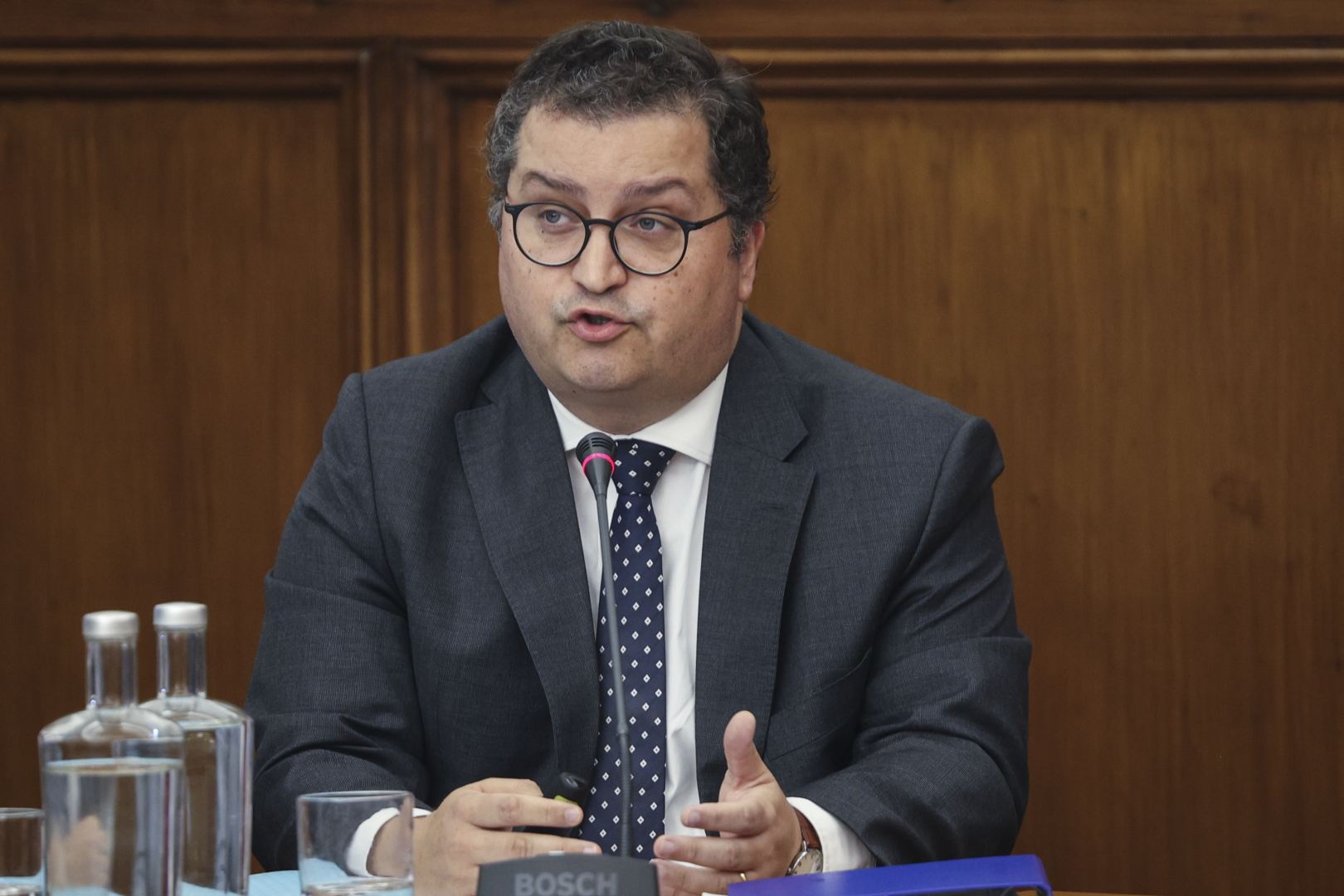



Regulating fees and surcharges is the first step toward becoming more competitive says Finances minister
Business associations have welcomed the government’s announced plan to move forward with a legal framework governing fees and charges levied—a measure provided for in the Constitution since 1997 but never actually implemented.
The goal is to eliminate some of the bureaucracy and systemic costs faced by taxpayers.
The bill that the government is expected to present to Parliament soon outlines the creation of a General Regime for Public Administration Fees.
This initiative aims to consolidate a myriad of scattered regulations—many of which are out of step with current realities—while simplifying and updating them where necessary.
Finance Minister Joaquim Miranda Sarmento explained the initiative by citing the need to “simplify the State’s operations, reduce bureaucracy, eliminate systemic costs, and boost the economy’s competitiveness.”
“This initiative finally addresses a priority long identified by the CIP,” begins Rafael Alves da Rocha, Director General of the CIP (Confederation of Portuguese Business). “It addresses a long-standing gap in the Portuguese legal system” that constitutes “a major concern” for business owners, he adds.
The CIP points to the “proliferation of fees and levies that fall formally outside the tax system, amidst a landscape of fragmented legislation, complexity, abuse, and a lack of proportionality and transparency” associated with the current model.
Rafael Alves da Rocha recalls a study conducted for the CIP by the consultancy EY and the law firm Sérvulo—presented in 2020—which tallied over 4,300 fees, 2,900 of which were collected by the central government.
The Portuguese Environment Agency alone was responsible for 600 such levies!
At the time, the authors criticised the complexity, lack of transparency, and fragmentation of information. In many cases, there was a complete lack of justification for the fee’s existence or the amount charged; the original rationale for the levy had been lost.
“At first glance, we can see a very significant convergence between the proposal presented by the commission [which produced the report to assist the government in drafting the legislation] and the positions the CIP has been advocating on this matter in recent years,” says Alves da Rocha.
“The call for a General Fee Regime—a position championed by the CIP from the outset—was, in fact, reflected in the Medium-Term Agreement on Improving Incomes, Wages, and Competitiveness, signed within the framework of Social Concertation in October 2022,” he notes.
Policy decisions
The study by the commission established for this purpose suggests—in addition to standardising the system into a single unified regime—that the fees and charges levied be linked to the costs of the service provided; this raises the possibility of adjusting them based on expenses such as wages or raw materials, for example.
Furthermore, the introduction of new fees would be contingent upon economic justification, which would need to be updated every five years.
Another proposed change concerns the statute of limitations, which would be extended to eight years—aligning it with toll charges—while the deadline for challenging a fee would be set at six months.
Despite the suggestions, the commission states that indicating which fees should remain or be eliminated falls outside its remit. That, argued Pedro Brinca—one of the economists on the working group—is a political decision.
Along similar lines, Rafael Alves da Rocha shifts the focus away from specific fees and levies to be scrapped, preferring instead to highlight a “well-designed framework for transitioning from a scenario of indiscipline (or even chaos) to one where everyone plays by clear rules—thereby reinforcing democratic legality, relieving companies of disproportionate burdens, and improving the business environment and trust in institutions.”
Even so, he notes, “at the end of the process, and following a transition period, all fees not grounded in regulations that comply with the General Fee Regime must be eliminated.” He adds, “Indeed, that is the direction of the proposal presented by the Commission.”
And, even without specifying the fees and charges that the CIP believes should decrease due to the upcoming proposed changes, it highlights the participation and contributions the CIP has already made to the process—particularly through “a study aimed at identifying relevant guidelines, especially for the business sector, regarding the legal framework to be established.”
“That study has already been submitted to the Government and provides the necessary basis for the CIP’s participation in the consultations now taking place to draft a final legislative proposal—a proposal to be presented by the Government to the Assembly of the Republic,” it concludes.
Source: CIP and Journal Económico
Image: Lusa