


Just why Portugal’s productivity is so poor and why labour reform is essential
Text: Chris Graeme; Photos: ICPT Fernando Bento.
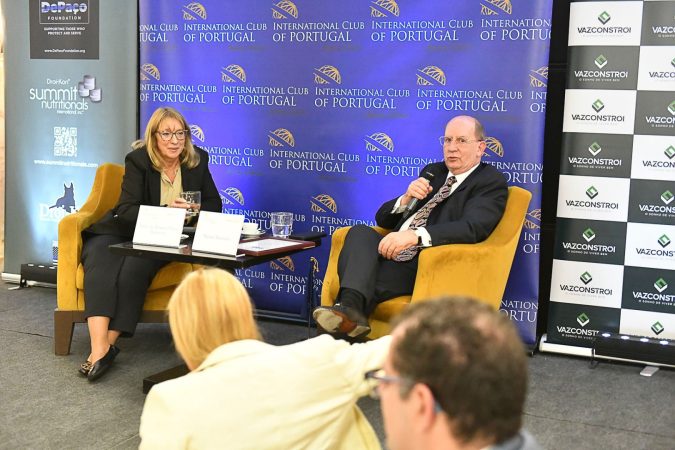
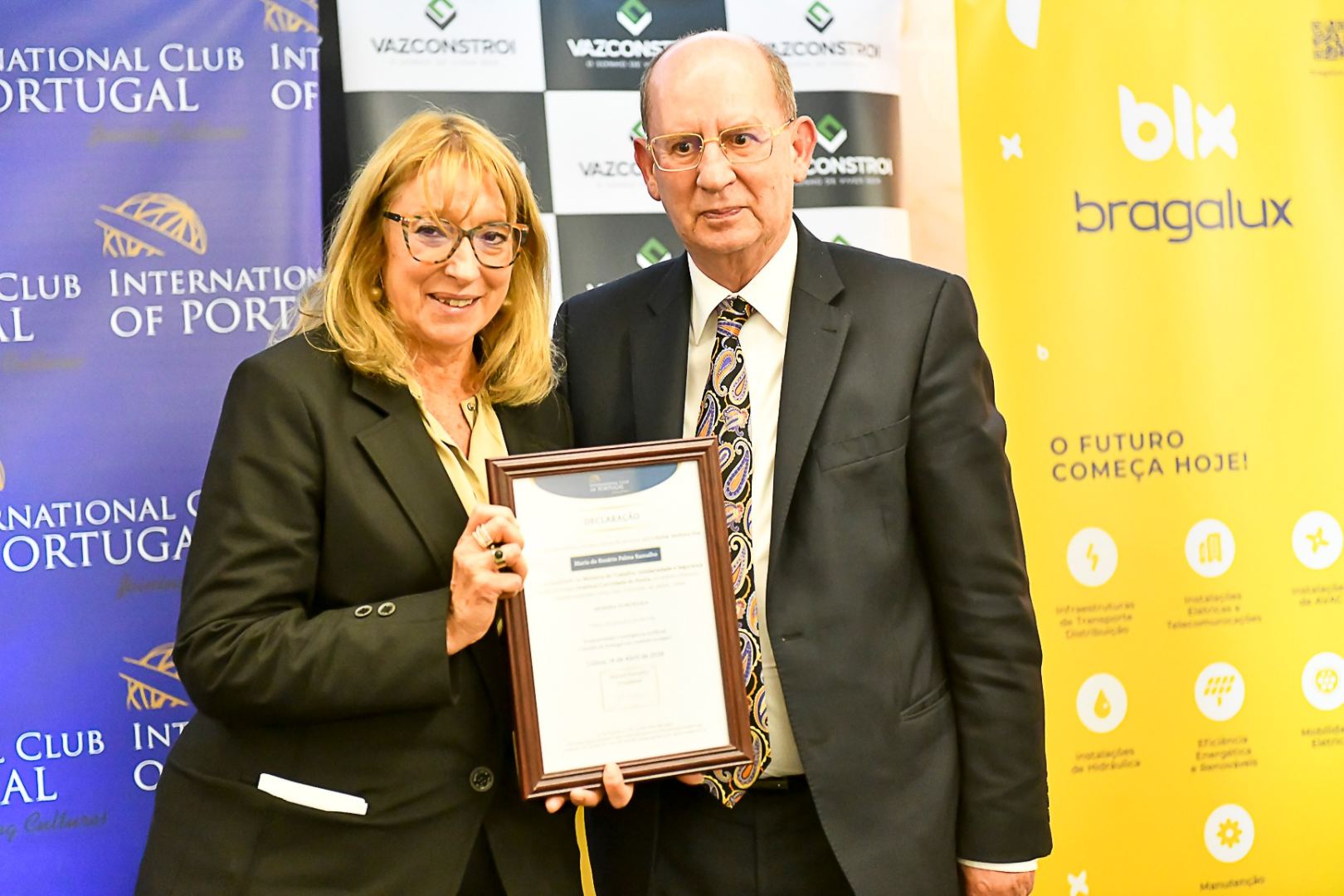
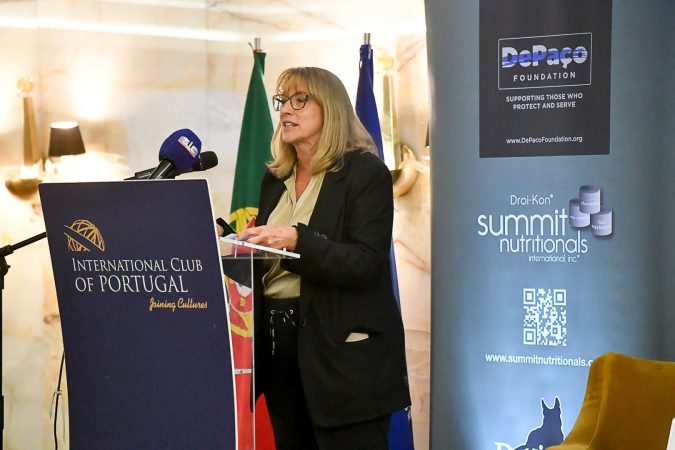
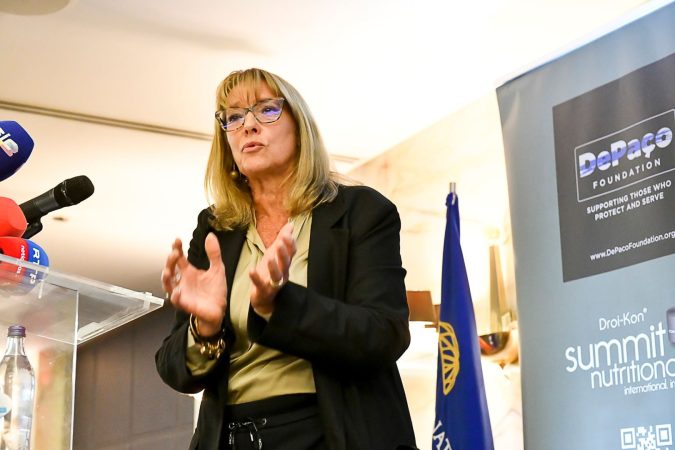
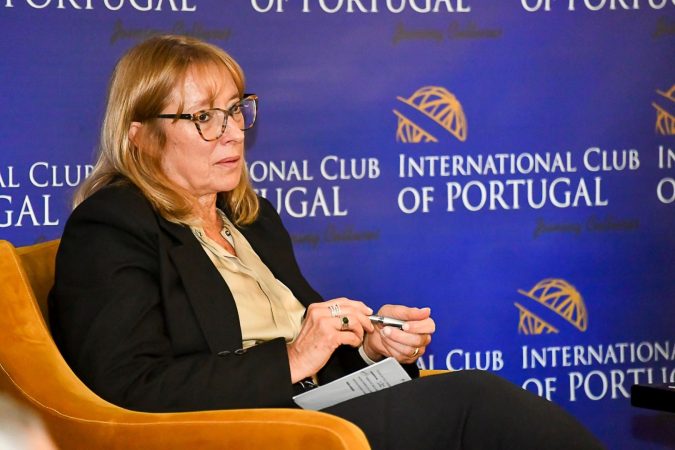
With a raft of structural reforms to Portugal’s tax and legal systems, a reduction in bureaucracy, and the introduction of more flexible working practices, Portugal has a “Golden opportunity” to improve its productivity and competitiveness argues Portugal’s Minister of Labour and Social Security, Maria do Rosário Palma Ramalho at the International Club of Portugal (ICPT).
Portugal has a productivity problem. Successive governments from the left to the right have known it for decades, yet no one has had the courage to take the bull by the horns until now.
Portugal’s centre-right coalition Democratic Alliance government led by Luís Montenegro has joined forces with company and industry associations to come up with a new but disruptive Labour XXI package dominated by a new Labour Code for Portugal.
But the package is facing resistance from basically one union, the UGT, which business leaders feel is holding the rest of the country to ransom.
Portugal’s government has restarted talks with the UGT union confederation and four major employer groups, attempting to salvage the labour code reform that collapsed last week after nine months of negotiations and over 200 hours of meetings.
The outcome will determine whether Portugal’s controversial Trabalho XXI package—containing more than 100 changes to employment law—proceeds to parliament to pushes negotiators and the government back to square one.
So here’s the low down on who drop-kicked who (certainly the union) from the minister’s point of view at the International Club yesterday and would any minister be worth their salt of they weren’t armed with a fistful of facts and figures which show just why this reform is so necessary for the country’s future.
Portugal with third most rigid labour laws in Europe
According to the OECD, Portugal comes second out of 39 countries worldwide with the most inflexible labour legislation.
Portugal trails in at 37 place out of European countries in terms of having the most rigid labour laws but the question is why?
All labour legislation in developed countries tends to be protective of workers because they are the weak part in the labour chain and if that was true 150 years ago when the first labour legislation began (In the UK and Germany at the end of the 19th century and start of the 20th century, then it is still true today.
Simply put, the traditional protective nature of labour protection systems began to undergo a strategic shift in Europe from the 1970s onwards, due to the emergence and evolution of the socio-economic situation and work models that were no longer the same as those of the late 19th century, when labour legislation appeared.
The emergence of new categories of workers, globalisation, and other extra-legal phenomena —because law always follows in its wake – had to solve problems that are inherent to life, and therefore, here the impetus was extra-legal—led the economic power houses of Europe.
Here the minister referred to Germany, France, Italy, not to mention the UK, which never had such rigid legislation, to begin what has been called the flexibilisation of labour laws, that is, reducing their traditionally very rigid, very protectionist character that they had had until then.
This was not a whim, but an act of prudence, of adaptation to new times and new challenges.
Portugal on a reverse path
Portugal, unfortunately, due to its historical vicissitudes, had taken a reverse path, maintaining its legislation organised as it had been 100 years ago, around three beliefs that today, more than ever, reality disproves.
First, a strange belief that workers who can marry, have children, etc., are incapable as workers.
And therefore, they should not have individual freedom. There has to be something to compensate them, which is the intervention of trade unions and, perhaps, freedom at the collective level, which is also important.
But, in fact, workers are seen as incapable. And therefore, they must always be “replaced in the regulation of their working lives” by unions. Second belief, the absolute primacy of the work model in the large industrial unit.
Labour law, the minister explained, developed in the light of Ford factories in the United States – the Taylorist model of work organisation.
And Portuguese legislation also grew in this way. “Our labour relations model was that of the large factory. This, incidentally, is somewhat strange in Portugal, because Portugal has always had very few large factories. Those that existed were good, but despite everything, as you know, we are a country where 95% of companies are micro-enterprises, therefore they have fewer than 10 employees”, she pointed out.
However, the legislation was designed for the large factory model. And thirdly, the myth that the more rigid and protectionist the legal regime, the more protection the worker has.
“This is a myth and we are talking about protection at various levels. The job cannot change, the working hours are always the same, the workplace is the company’s premises, because the factory is also not easy to change”.
The remuneration is fixed. Everything that is possible to make rigid in Portugal has been made rigid. And, ultimately, dismissals are very difficult, therefore, maximum guarantees of protection.
“This is how our system was built over time, and I must say, this rigid structure continued to be rigidified at a time when other countries were becoming more flexible, adapting to new realities, and ours was not”, argued Maria do Rosário Palma Ramalho.

Productivity 28% below European average
And it was made particularly inflexible in the last 10 years, that is, from 2015 until now.
“It is important to understand the practical consequences of this evolution and they are borne out by the numbers”, the minister added.
And here are the stats to show the madness of the existing situation:
Productivity per hour worked in Portugal is 28% below the European average. Only Bulgaria and Greece have lower productivity.
National wages are 35% below the European average. The insistence on renegotiating, on ensuring that all forms of work are, first and foremost, a work contract, and if possible, an open-ended contract, which seems like protection—or seems to offer more protection—ended up excluding those who want to enter the labour market, creating a labour market that is absolutely segmented between those who are already there and those who can’t enter.
Between 2019 and 2024 alone, therefore, under so-called absolutely protective legislation, youth unemployment increased by 5%, from 18.3% to the 23.4% that the AD government found when it took office.
This was four times the general unemployment rate in Portugal. And, naturally, “this harms other equally legitimate forms of work, to the detriment of the economy. The systematic increase in burdens and demands imposed on companies, which also appears to be protectionist, in practice prevents business growth”, she lamented.

Companies stay small
And companies in Portugal preferred to remain small to avoid complexity and bureaucracy, and this is according to data from the World Economic Forum, and not the minister’s or the government’s conclusions.
“Portugal’s company network is comprised 96% by micro-enterprises – that is, companies with fewer than 10 employees. Obviously, this also encourages many informal arrangements and situations of informal work. Then, it is said that companies must innovate. We are in the area of digitalisation, therefore, this is undoubtedly truer than ever”, argued Maria do Rosário Palma Ramalho.
However, Portugal stood below the European Union average in the so-called digital intensity index, especially when applied to SMEs, that is when applied to more than 95% of Portugal’s business fabric.
Only 8.6% of companies invest in digital technology and digital tools, compared to the European average of 13.5%. “These are the consequences of the rigidity of our system”, she said.
AI shows up inadequacy of current labour systems
Artificial intelligence had exacerbated the inadequacy of more rigid labour systems of the so-called Industry 4.0 and makes this even more complex, because Industry 4.0 throws up challenges on four fundamental axes that will have to be addressed in the near future.
First, artificial intelligence poses challenges to employability. A very large number of jobs will disappear, professions that will be replaced by machines, and this creates a very strong demand for retraining.
This, in addition to the fact that, at the moment, it is still uncertain what new job opportunities will arise. “We estimate that many will, but it is, obviously, still too early to know”.
Second, “Industry 4.0 and artificial intelligence make the transition from rigid work models, such as those of the Ford company, to more agile and diversified work models unavoidable”, Maria do Rosário Palma Ramalho stressed.
“Today, we cannot deny that we have new business models that are only possible, that have only developed, thanks to digitalisation and digital tools. Not all of them are employment contracts, much less permanent employment contracts, but even within existing labour regimes, we now have teleworking, other forms of remote work, work on or through digital platforms, and digital nomadism”, the minister explained.
Portugal, incidentally, was a good place for digital nomads to work, because the climate is good, nomads can go to the beach at the end of the day, and of course, can work, whatever the time, for China or somewhere else, from the comfort of their own homes.

AI reinventing recruitment
Along these lines, the 4.0 economy will demand changes in all work relationships, not just those tied to technology.
And that doesn’t only affect technological work. It affects regular work. “Look how the 4.0 economy has forced us to reinvent recruitment, for example.
Today, there’s no employer who doesn’t check a candidate’s LinkedIn profile, who doesn’t first make a selection using an algorithm. Only at the end might they get to an interview, if they get there at all, if the process isn’t completed beforehand”, said the minister.
The 4.0 economy and AI demanded more flexible working time arrangements to overcome the paradigm of the physical workplace, the workstation, as it was called, because workers can work anytime and from anywhere. And it can be controlled anytime, anywhere.
This also had effects, obviously, on how management powers and control powers are considered.
“We are very far from the modern-day foreman of Charlie Chaplin with the whistle. It’s not necessary and it’s much more effective than the whistle. These are the challenges posed in this second axis. This 4.0 economy also requires new models of organisational communication”, added Maria do Rosário Palma Ramalho.
The intranet was an example and yet Portugal’s labour code still states that communications should be posted in designated locations.
“Which ones? And where are the workers seeing them? They’re not there. We may have to change this”.
More care needed to be taken In the third axis of artificial intelligence which also reinforced an ethical imperative, which was to ensure that there was effective human supervision of this digital tool.
This meant ensuring that algorithmic decisions are not the final ones, that they do not violate the dignity of the worker, and that they are not discriminatory.
“We know from many studies, even theses on this, that demonstrate that algorithms are more discriminatory than humans because they have the potential to incorporate all the discriminatory culture that has existed in society. We have to control this”, the minister warned.
AI requires increased digital literacy
And finally, minister Maria do Rosário Palma Ramalho stressed that artificial intelligence necessitated increased digital literacy because it impacted all work relationships across the board, without exception.
“We are not prepared for this impact. It is in this context that the Trabalho 21 project arose within a framework of particularly rigid labour legislation which we have, and which we have made even more rigid in the last 10 years, but also within a framework of profound challenges to our economy, challenges of productivity, challenges of competitiveness, in a context of the almost total globalisation of labour relations and with artificial intelligence dominating.
“Trabalho 21 has a clear purpose. It is about creating a regulatory framework that allows companies and workers to adapt to the challenges of the 4.0 economy and the digital age, to make companies more productive and our economy more competitive, but without jeopardising workers’ rights. The objective of this reform is to value work in all its aspects”, concluded Portugal’s Minister for Labour and Social Security, Maria do Rosário Palma Ramalho.