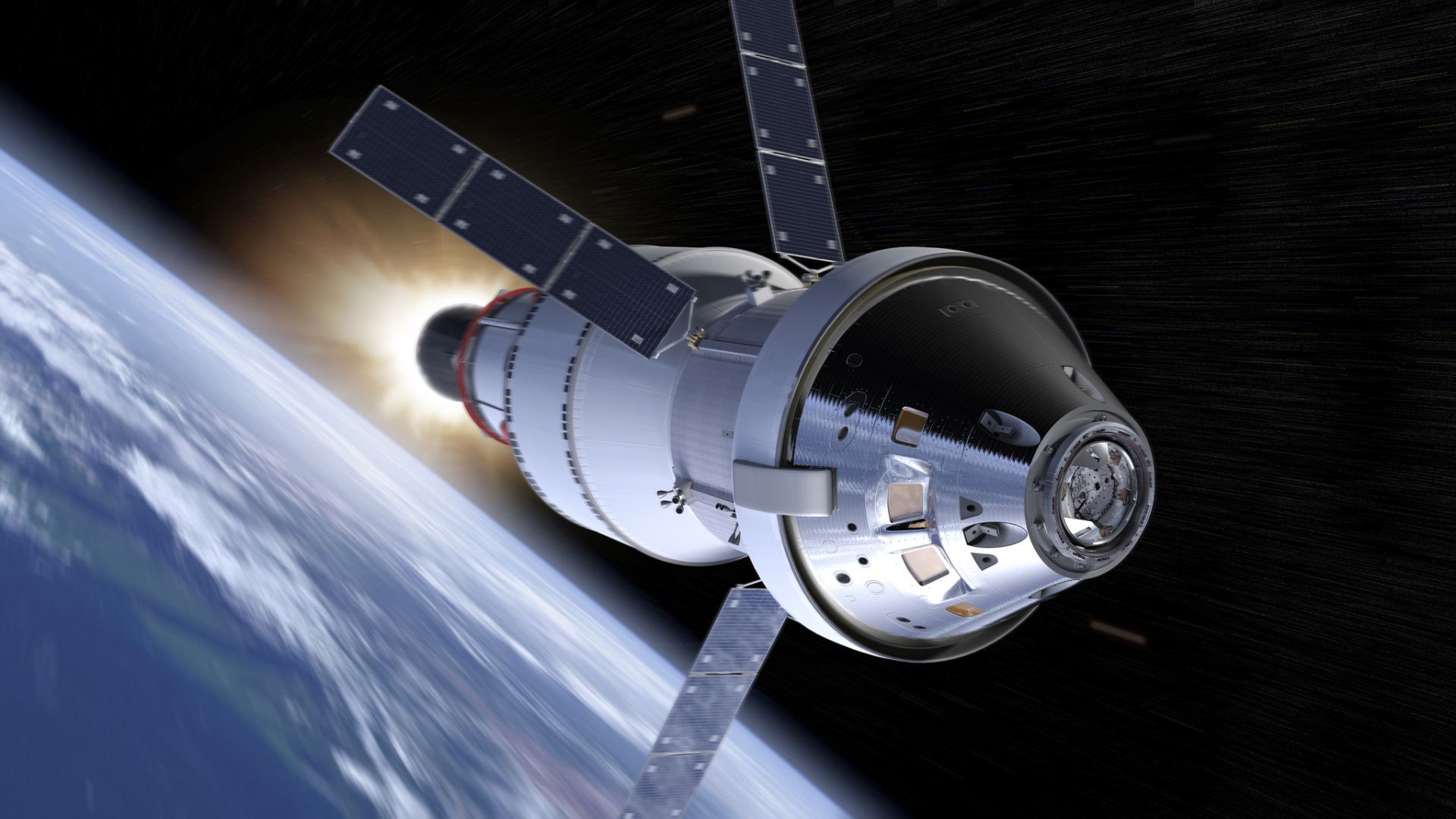



Portuguese cork once again protects NASA’s Artemis mission
After contributing to the Artemis I mission in 2022, Portuguese cork returned to space as part of the Artemis II mission.
The material is used in the Space Launch System (SLS) – the only rocket capable of carrying the capsule, astronauts and payload directly to the Moon in a single launch.
Cork acts as an insulating material, protecting critical structures and various components from extreme temperatures during the flight and ensuring the spacecraft’s integrity in some of the harshest conditions ever faced by humankind.
In this context, cork is reaffirming its position as a cutting-edge technology.
Beyond its more traditional applications, cork is revealing its true technological potential in space missions.
Through intensive engineering work, Corticeira Amorim has been able to transform this 100% natural raw material into the advanced composites P50, P45 and, more recently, P65.
Cork plays a simple but critical role in the SLS rocket and Orion capsule: to protect vital structures by sacrificing itself.
When exposed to extreme heat and relentless aerodynamic stresses, cork undergoes a controlled transformation, creating a carbonised layer that provides thermal insulation, absorbing mechanical energy and ensuring the integrity of the spacecraft and its crew.
Artemis II was a historic 10-day crewed lunar flyby mission that successfully launched from NASA’s Kennedy Space Center in Florida on April 1, 2026, and returned safely on April 10, 2026. It was the first crewed flight of NASA’s Space Launch System (SLS) rocket and the Orion spacecraft.The Artemis II mission served as a vital test flight for deep-space exploration, marking the first time humans traveled to the Moon in over half a century.
Source: Corticeira Amorim.