


Why Italian wines are trending in Portugal
Imagine being a Portuguese wine rep trying to sell Italian wines in the Portuguese market. Sounds like a thankless task, doesn’t it? I mean, it’s a bit like selling sand to the Arabs or ice to the Eskimos.
For if there’s one thing that Portugal produces in abundance from the north to the south of the country, it’s wine.
But you would be completely wrong in any such supposition because Italian wine is trending right now in Portugal, particularly among the middle and upper classes and the HNWI relocants from the US and Brazil.
And one person who knows is the co-founder of Emporio Itália, Edwin Fenech (CEO) who with co-founder Roberto Solimene (COO) set up the import website dedicated to selling Italian fine foods and wines on the Iberian peninsula six years ago.
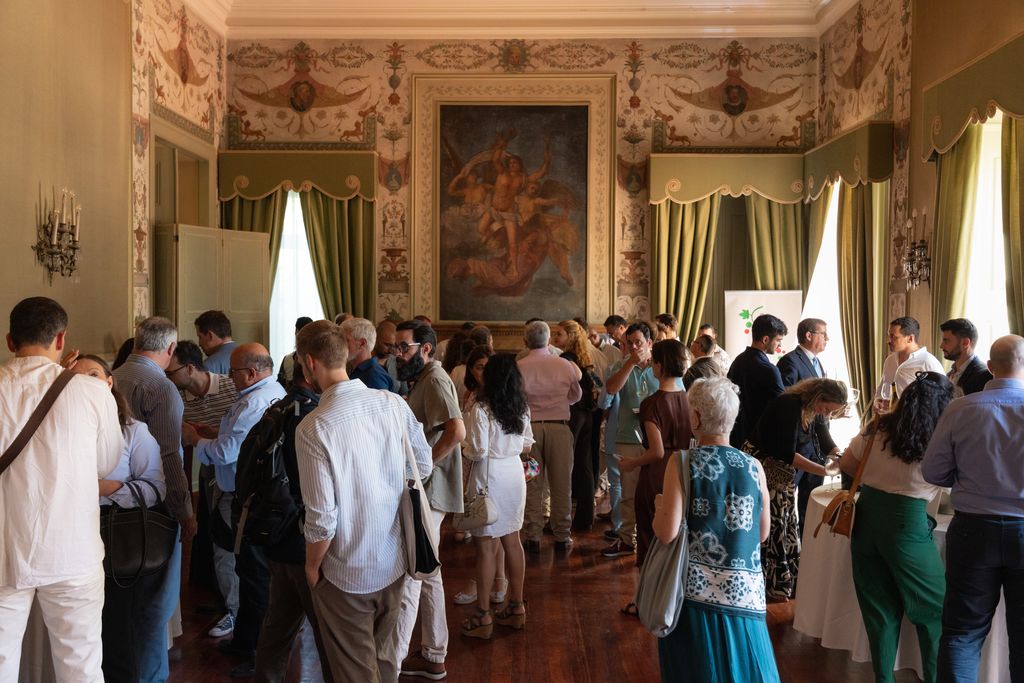
I hooked up with Edwin at an Italian Wine-tasting session hosted by the Italian Embassy in Lisbon organised by the embassy and Italian Trade Agency in partnership with the wine distributors Dream Class, Emporium Itália and Garrafeira Nacional.

Picture: Nelson Guerreiro (Garrafeira Nacional)
Many of the Italian wines presented have only just arrived on the market in Portugal. They are a good representation of the various regions of Italy and were showcased for the first time at Vinitaly, the largest wine fair in Italy held in May in Verona.
An idyllic setting
Before we even start, I must give a shout-out to the Lisbon palacete that houses the embassy and its gardens – absolutely stunning! An example of Portuguese 18th century rococo elegance.
The historic Palazzo dei Conti Pombeiro (Palace of the Counts of Pombeiro). Located in the Campo Mártires da Pátria district, dates back to the early 18th century.
After being severely damaged in the 1755 earthquake, it was meticulously restored and later acquired by the Italian government in 1925 to serve as the diplomatic mission.
And by the way, there were 11 counts of Pombeiro, all from the Castelo Branco aristocratic family who built the palace a stone’s throw from the palace on the other side of the road commissioned for the long-suffering Queen of England, Catherine of Braganza when she returned from London in 1693. I bet the incumbent count at the time was invited for afternoon tea!”
Anyway, I digress massively and must be forgiven for my sensibility to the aesthetic beauty of the Pompeii Room where the wines were served.
Back to these fine Italian wines, of which I select six which I got to taste loved and which were presented by Geziane Oliveira (Dreamplus) and Nelson Guerreiro (Garrafeira Nacional) after an appropriate introduction from His Excellency, the Italian Ambassador to Portugal, Claudio Miscia (pictured below).

Barolo – D.O.C.G – Comune di la Morra (Distributed by Dream Plus)
In the beautifully painted room around 60 guests sampled a fine red Barolo from the family-owned winery Ciàbot Berton in the Commune di la Morra district of Piedmont and represent five generations of wine growers and producers.
It is a bond that binds the Oberto family to La Morra and the Barolo Hills in a strong attachment to the land since the first vineyard was planted in 1876.
One symbol of this attachment is the charming, rustic ‘ciabòt’ is a small rural building typical of the Piedmont hills, closely linked to the vineyard landscape of the Langhe and Monferrato.
Its origins date back centuries, to a time when Piedmontese farmers would build these small stone or brick shelters to rest, store tools or take shelter while working in the fields.
Over time, the ciabòt took on a symbolic role in the local culture, representing the close connection between man and the land, a place of rest and reflection, but also of meeting and sharing.
Its small size, rustic style and often panoramic location convey a sense of peace and simplicity, offering the ideal space for a restorative break and to share convivial moments with friends and family.
The wine is made from 100% Nebbiolo grape variety which produces a robust and rich wine with floral notes of rose and violet, plums, strawberries, green figs, spices and carob.
The Barolo wines were rebranded in 2024 with stylish floral labels and are managed by the fifth generation, Edo, Giacomo and Nicola. Perfect for meat dishes and game!
Grillo Parlante 2025 (Distributed by Dream Plus)
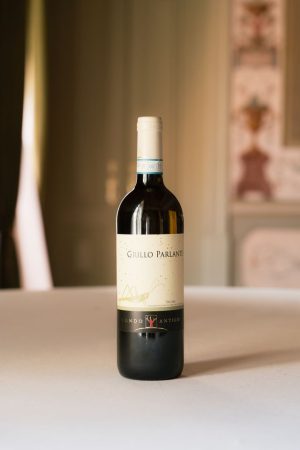
Next up a lovely Sicilian white, Grillo Parlante 2025 (above), a biological wine from Fondo Antico, in another family story spanning generations.
The history of Fondo Antico and Polizzotti-Scuderi Family has its roots in an 80-hectare vineyard located in Contrada Portelli in the Trapani area of Sicily.
Grown among the prickly pears, olive trees and lemon groves, the wines are made using the Grillo and Nero d’Avola and Syrah grape varieties.
The vineyards and estate have been owned by the family since the early 1800s on land originally dedicated to growing wheat and cotton.
Around 1920 the first vineyards were planted and the family started to produce wine in Baglio of Rilievo, located 7 kilometers from Portelli.
The Grillo Parlante 2025 suits both raw and cooked fish either salt baked or with fresh herbs.
It is a bright and lively wine of a pale yellow with greenish reflections. Its bouquet combines the delicacy of flowers with the sweetness of white fruits, giving voice to the Grillo Parlante (lit. “talking cricket”, i.e. Pinocchio’s Jiminy Cricket) and disclosing the fruity flavours.
To the palate it is fresh and pleasantly tasty. Its finesse and balance show a perfect compromise between acidity and ripeness of the fruit.
Refosco dal Peduncolo Rosso (Distributed by Dream Plus)
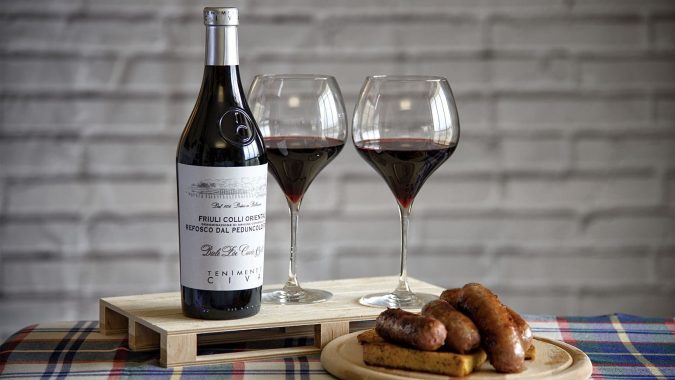
And on to the Refosco dal Peduncolo Rosso from Loggia Dei Colli, again, another family-owned winery and part of the Martellozzo Group.
Martellozzo’s origins lie in the warm, exuberant Veneto region but chose Friuli Venezia Giulia as land to grow the company.
The Martellozzo vineyard, officially known as Piera 1899 (formerly the Piera Martellozzo winery), is owned and operated by Piera Martellozzo. The estate was founded in 1899 by her grandfather Giovanni and expanded by her father Mario.
Piera Martellozzo took over the reins of the family-run estate in 1992, subsequently relocating and consolidating their primary vineyards in the Friuli-Venezia Giulia region of northeastern Italy
The two areas cultivated are very different but they also have a lot in common. The fertile earth of the Triveneto area and the dry stones of the Magredi plain are behind the wines, each of which pays tribute to the wonders of its distinctive home land.
The name of this brand means “Loggia of the Hills”. A “loggia” is a type of rustic gallery that is open on one side. People traditionally gathered there to eat and celebrate the end of the harvest.
The wine embodied the characteristics of the land and the work of the local people. Its wholesome and full yet delicate flavour conveys memories from the distant past.
Refosco dal Peduncolo Rosso is a wine produced with the black grape variety native to Friuli-Venezia Giulia.
It owes its name to the red color of the peduncle (the grape cluster stem) during the ripening stage. The wine is structured, with good acidity, firm tannins, and notes of wild berries and spices.
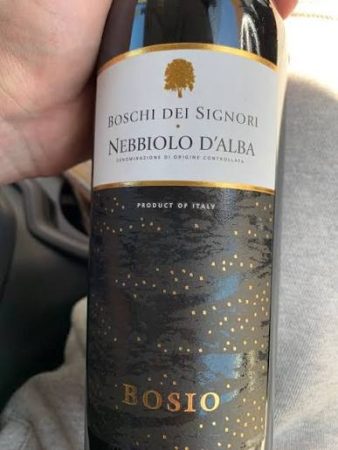
Bosio Nebbiolo d’Alba DOC (Distributed by Emporio Itália)
And then on to Bosio family estates and the elegant Nebbiolo d’Alba DOC. (pictured above)
The word “Estates” could be summed up in two words: assets and heritage. Two words which are very well known on the hills where Bosio Family lives.
They are in Santo Stefano Belbo, Alba and Asti area, in Langhe (Piedmont) which, by the way has a famous wine museum dedicated to Barolo wines.
The estates are run by father and som Valter and Luca Bosio together with wife and mother Rosella.
The turning point for the family had been the acquisition of Belcolle, the Verduno’s winery that make Barolo and Pelaverga.
“We figured out that we broadened our horizons at that point, not just from a commercial and professional point of view, but also culturally.
We became a winery that looked out to the world in terms of exports, but kept our roots tied to the soil of the hills that give us Moscato, Barbera and Barolo.
A thread of traditions and excellences that weave through our unique and uncontaminated landscapes, cross villages and historical cities and finish with our wines, which are the higher expression of our “assets” and our “heritage”, says the family.
And what is this red wine like on the palette? Well, it’s fruity, light, refined and delicate with fruity notes and a touch of spices that are often associated with the Nebbiolo grape variety from Piedmont. A very flexible wine, it’s adaptable to pretty much any fine dish.
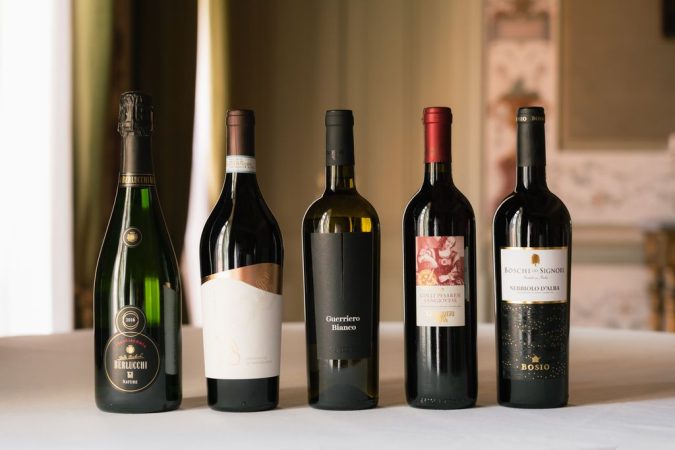
Berlucchi ’61 Nature 2018 (Distributed by Emporio Itália)
And on to a Berlucchi ’61 Nature 2018 sparkling Franciacorta Millesimato wine. (pictured far left)
This wine is made using Chardonnay (70%), Pinot Noir (30%) grape varieties. Dedicated to the most attentive connoisseurs, It is a vintage that when paired, enhances complex first courses and filled pastas, main courses or meats and poached fish, and aged cheese as well.
The Franciacorta wine was founded in 1961 by Franco Ziliani on land that is now famous for producing fine Italian sparkling wines.
Now the wines are produced by Guido Berlucchi who in 2021 celebrated the 60th anniversary of the first Franciacorta.
That year the prestigious Wine Spectator magazine nominated the Palazzo Lana Extreme 2009 its top wine with a score of 93.
But the origins of winemaking on these vineyards go back to 1879 when the Berlucchi family registered winemaking for the first time.
In 1955, Franco Zillani threw down a challenge to Guido Berlucchi, a descendant of the noble Franciacorta Lana de’ Terzi family to produce an “effervescent” wine in a growing region traditionally know for still table wines.
The result was the debit of Pino di Franciacorta made using the traditional classical champagne making method and is the forerunner of the Franciacorta I sampled at the wine tasting.
The family explain that “In 1961 we created the first ever Franciacorta wine. Today the Franciacorta Method is one of the strictest sets of specifications in the world in terms of productive yields and months of ageing. What does that mean in simple terms? That a glass of Berlucchi contains no compromises, only the highest quality.”
And in a word it was as divine as the palace in which I stood. An intense straw yellow colour with streaks of gold when held to the light, it was floral, citrusy and with slight hints of candied fruits.
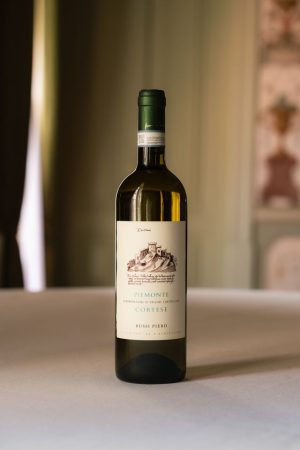
Piemonte DOC Cortese from Bussi Piero (Garrafeira Nacional)
Finally, the Piemonte DOC Cortese from the Bussi Piero winery – a fresh, elegant wine with a delicate profile. (pictured above)
A family-owned winery now in its fourth generation, its 12 hectares of vineyards are nestled on the hills between Langhe and Monfarrato at Calosso, Castagna.
After the the First World War, Agostino Bussi, (born 1900), abandoned his father Nicola’s custom of selling all the grapes to shopkeepers, and started to vinify a small part of Barbera grapes.
The company at that time consisted of about 1.5 hectares of vineyards and when Germano Bussi took over in the 1960s, the number rose to four.
The turning point was in 1968 when Germano began to vinify Muscat grapes, a very demanding and tiring process considering the equipment of the time.
After hand pressing the grape juice was clarified by filtering with conical cotton filter bags or ‘Dutch bags’, in a very slow and laborious process.
The results were good and the family bought other vineyard plots, focusing mainly on the Moscato & Barbera grape varieties.
Piero Bussi, (third generation) currently runs the winery with his son Federico. Today they have 12 hectares of vineyards, focusing on the quality of the product, first in the vineyard and then in the cellar.
Flexible, this floral and fruity white wine goes well with starters, pastas, white meats and fish.
Trending in Portugal
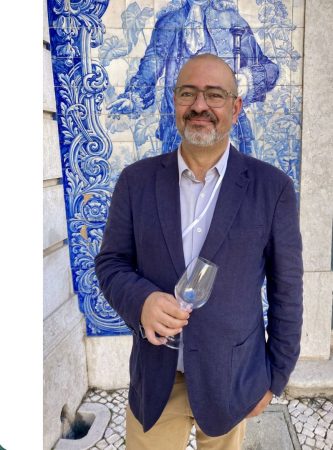
So these were the wines that I have selected and highly recommend. I ask why fine Italian wines are so “di tendenza” right now?
“Since I joined the company eight years ago we’ve enjoyed two-digit growth in terms of volume and bottles of wine imported per year ad around 60% of my portfolio is Italian wines,” says Edwin Fenech (Emporio Italia).
This reflects the Italian wine export market in Portugal as a whole which has grown from €13 million in 2019 to €21 million in 2025 which shows a growing appreciation for the wines among restauranteurs and consumers in Portugal.
And it’s no accident that these numbers have mushroomed since 2019, the year in which Portugal saw a record number of tourists and ever since has experienced a wave of immigration from all over the world.
Edwin Fenech says that he mostly sells the wine to restaurants and of course the Emporio Italia online store.
“We have divided the business in three ways. There are those who are looking for discounts online, and others who are not familiar with Italian wines but perhaps have heard about the Favorita or Grillo grape varieties and want to try these wines.
“Then there are the connoisseurs who go for wines that are beyond the reach of many because these wines come from small producers and prices can reach into three digits per bottle. For example, sometimes a bottle of red Soldera Case Base from Tuscany can easily sell for €900 and upwards.
In fact, if you look on-line you can see some that range from €1,450 to €5,455 a bottle!
But on the other hand, the Italian wine importer also sells some quality bottles of wine for under €100.
And the reason why Italian wines have taken off in Portugal with so much local competition?
“The biggest change in the wine distribution business over the past 10 years is that it has gone from being mostly dominated by Portuguese wines but today with the influx of foreigners – both relocants and tourists – is that we have French, Italian and Americans living and visiting Portugal.
“For the first give years selling to restaurants, for example, I had a hard time selling anything but Portuguese wines except to Italian restaurants. Now, we have Portuguese restaurants with Italian wines on their wine lists,” explains Edwin Fenech.
This is because of the increase in the number of sommeliers who know Italian wines, or the owners have more gastronomic culture. Today, we’re selling Italian wines in Lisbon, Cascais, Porto and the Algarve. Ten years ago you would find perhaps one distributor selling Italian wines and today there are many and that’s because of demand,” concludes Edwin Fenech, co-founder of Emporio Italia.
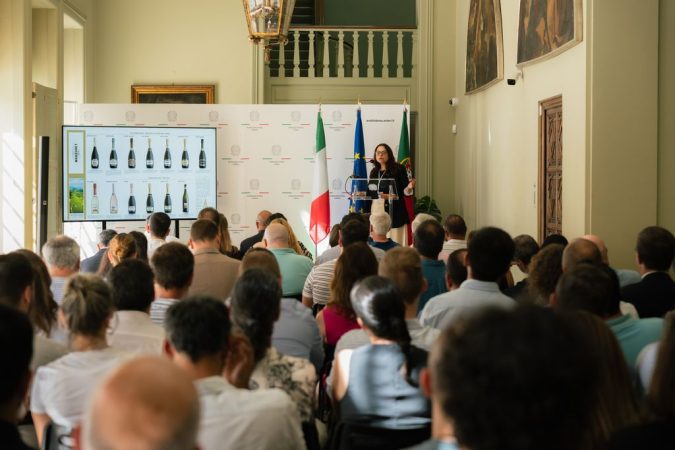
Photo: Geziane Oliveira, from distributor Dreamplus.
Text: Chris Graeme; Images: Tiago Claro – Supplied.