


Minister of Finances expects 2% growth in 2026
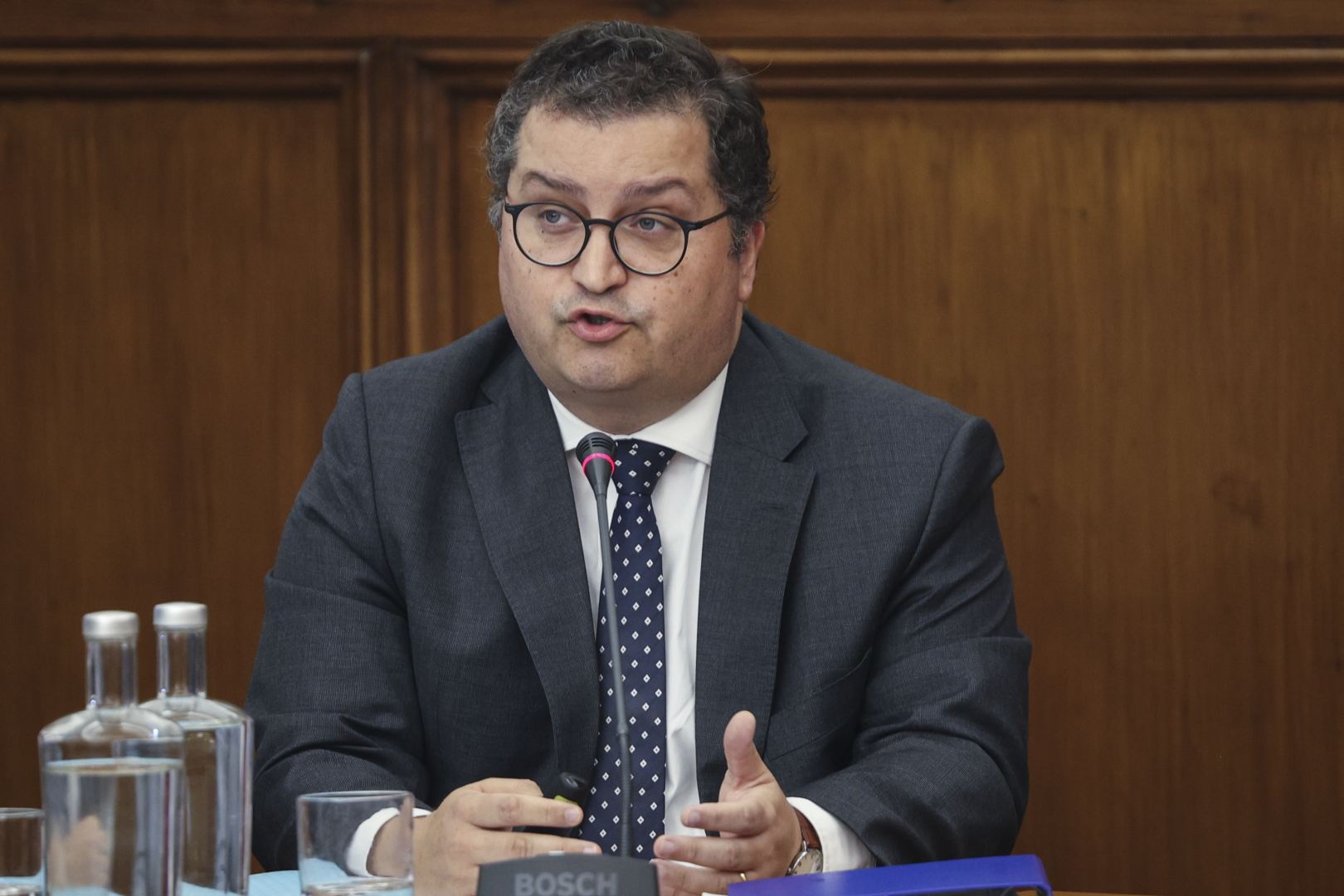
Portugal’s Minister of State and Finance, Joaquim Miranda Sarmento, expects economic growth of 2% in 2026.
The minister gave his forecast to the Budget, Finance, and Public Administration Committee today. (Wednesday)
Regarding the budget balance, Joaquim Miranda Sarmento projects a figure of 0% for 2026, while public debt is expected to remain above 87%.
“The data I have for the second quarter is positive. We expect an acceleration in consumption, investment, and exports.
We are counting on a dynamic tourism sector. Exports continue to grow in tourism, technology, and services.
The labour market remains resilient, with an unemployment rate below 6%. Wages had remained practically stagnant in real terms since 2018. They began to rise in 2019. Wages fell in real terms in 2022 due to inflation but recovered in 2023.
In 2024 and 2025, we are seeing the largest real increase in wages in the last decade—and certainly since we joined the Eurozone,” the Finance Minister added.
“This, combined with the personal income tax (IRS) reduction, has led to significant growth in disposable income for 2024 and 2025. The cumulative figure for the two years exceeds 10%. We are also seeing growth in savings,” he added.
Miranda Sarmento noted that the Recovery and Resilience Plan (PRR) has gained considerable momentum. “We are close to the 10th payment milestone. We intend to fully utilize the available grants and loans. We have attracted foreign investment across industry, technology, the energy transition, and services. The banking sector remains highly resilient, with strong capitalization levels,” the official explained.
“We have already cut taxes by approximately €3Bn, focusing on personal income tax (IRS), property transfer tax (IMT), stamp duty, and corporate income tax (IRC),” he added. “We are carrying out public finance reform and implementing tax simplification measures,” he emphasised.
Miranda Sarmento further stated that regarding the 2024–2025 budget balance—excluding temporary effects—the balance rises from 0.6% to 1.2%, with the adjusted primary balance exceeding 3%.
“Looking at net expenditure growth—excluding temporary expenses—we are aligned with the growth rates recommended by the (European) Commission. The tax burden fell to 24.3% between 2023 and 2024,” he noted.
The Finance Minister highlighted that the spread on Portuguese debt is lower than that of Spain and France, although it remains 35 basis points higher than Germany’s.
Miranda Sarmento noted that this has resulted in recognition from rating agencies and “strong demand” for Portuguese debt. “Demand is 10 to 20 times the issuance value. This has contributed to a reduction in yields,” he said.
Miranda Sarmento acknowledged that this year presents challenges, noting that implementation is difficult due to the RRP (Recovery and Resilience Plan) loans. The Finance Minister added that two unforeseen shocks had reduced the government’s room for maneuver: the storms that battered Portugal and the outbreak of conflict involving Iran.
“In the wake of the storms, we provided support to the population and for the reconstruction of affected areas—efforts that are ongoing. We protected the people and businesses hardest hit by the energy shock. We launched a capitalisation and cash-flow support facility. We introduced the PTRR to help the country recover from and withstand future weather events and storms, as well as a natural and seismic disaster fund.”
“To ensure we have the means to respond to the damage caused by these events,” said Miranda Sarmento.
Regarding the energy shocks triggered by the conflict in the Middle East, Miranda Sarmento noted that the primary impact had been on oil prices, which in turn affects fuel costs. “It hasn’t yet translated into gas and electricity prices. Targetted support has been directed at sectors where fuel costs have a significant impact. There is also a general measure where the increase in VAT revenue translates into a tax discount,” the official stated.
Responding to MPs from the Chega party—who questioned the minister about fuel prices and why VAT on fuel has not been lowered—the Finance Minister emphasised the need for “prudence” given the “enormous uncertainty” in the Middle East. “We need measures targeted at the sectors most affected by these fuel price hikes—increases that could otherwise be passed on to the price of goods,” the official said.
Sources Lusa/Económico
MIGUEL A. LOPES/LUSA
Copyright: © 2026 LUSA – Agência de Notícias de Portugal, S.A.