


The future of construction – digitally-designed pieces, factory-made components, skilled labour and assembly on site
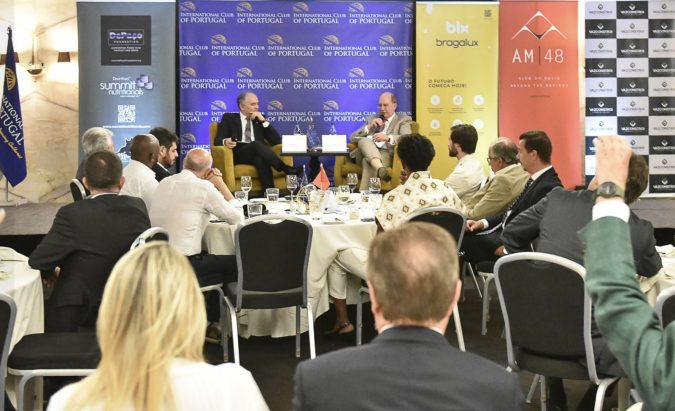
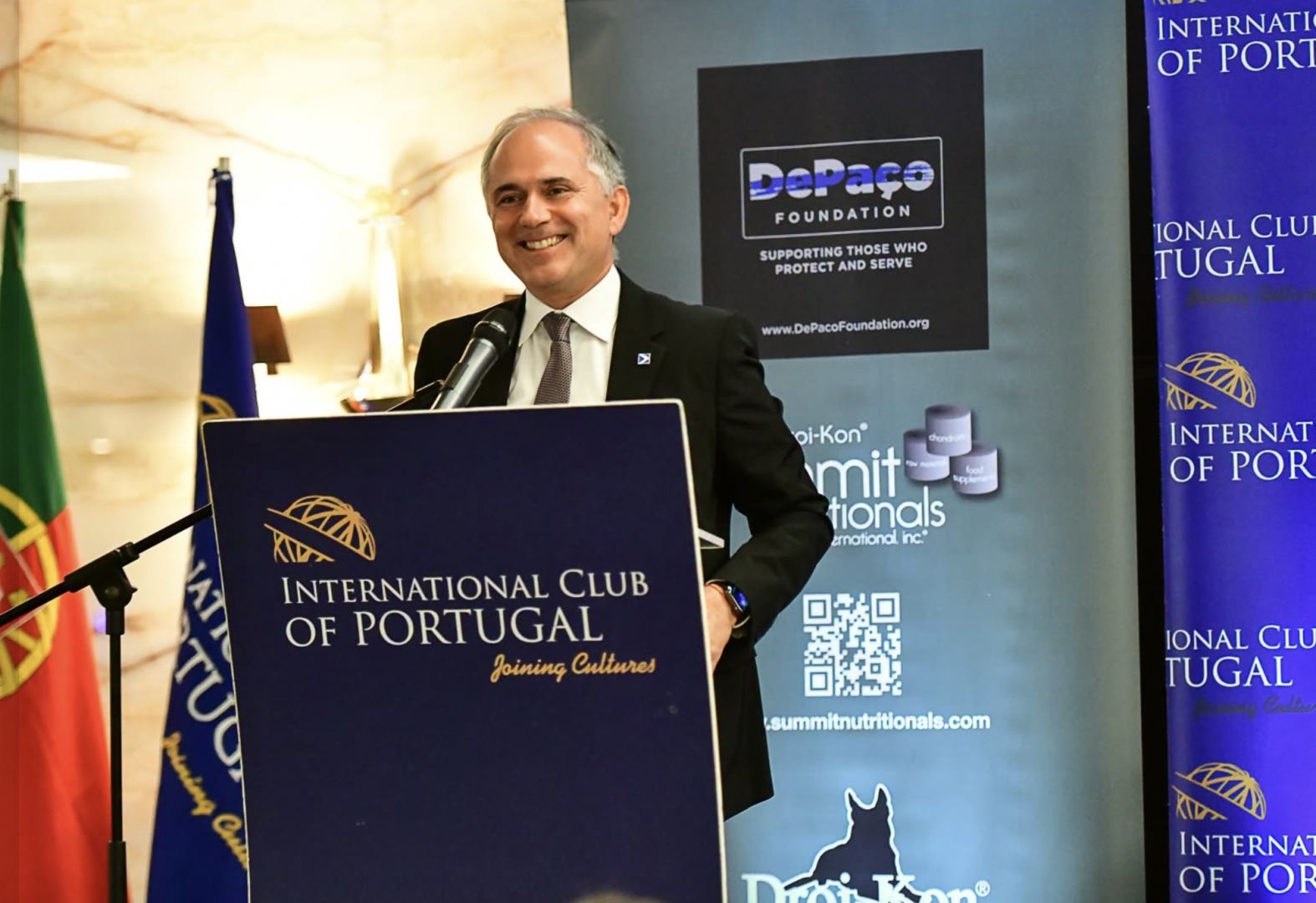
Industrialisation is the only sustainable future for the construction industry to counter a situation of rising labour, construction and raw material costs. In short, it requires the complete digitalisation and modular industrialisation of the sector says António Carlos Rodrigues, CEO Grupo Casais at the International Club of Portugal (ICPT).
Text: Chris Graeme; Photos: Fernando Bento.
Portugal’s Casais Group is one of the country’s success stories in the construction sector, employing over 7,000 staff, and a footprint in 18 countries spanning four continents.
An internationalisation success story, in 2025 its consolidated business turnover stood at €1Bn – For context, this marked a significant growth from 2024, when the group reported a turnover of around €836 million to €846 million.
Half of these revenues were generated in Portugal, and the other half in international markets.
In Europe: Portugal, Germany, Austria, Belgium, Spain, France, Gibraltar, Netherlands, and the United Kingdom.
In Africa: Angola, Ghana, Morocco, and Mozambique.
In the Middle East & Asia: Saudi Arabia, United Arab Emirates (Dubai and Abu Dhabi), and Qatar.
And in the Americas: Brazil and the United States (primarily Texas).
This is a big company and rivaled perhaps only by that other Portuguese construction giant Mota- Engil which tends to be far more involved in large-scale public infrastructure projects across the world.
The company, managed by António Carlos Rodrigues, who was the guest speaker at the International Club of Portugal (ICPT) on Thursday (July 16) at a Lisbon hotel, is known to be a trailblazer in areas such as management, strategy, and innovation.
The CEO is a Master of Civil Engineering from the University of Minho and attended such prestigious educational establishments as Harvard Business School, and the Massachusetts Institute of Technology (MIT).
He is a man who believes in the digital transformation of the construction sector guided by his slogan “People, Planet and Productivity”.
A company with family links to a medieval past
Mr. Rodrigues informs that the name of the company was not taken from the family but rather a relationship with the Monastery of Tibães in Braga that goes back six generations.
“Before we were builders, our family looked after the land that surrounded the Benedictine monastery”, and pointed out that even the São Bento Palace (the Prime Minister’s official Lisbon residence) was once subordinated to Tibães, the home of the Order of Saint Benedict.
So the name came from ‘Casalas’ because “my family were the ‘Caretakers’ of the monastery lands”.
And indeed, there is something humble and spiritual about this quiet spoken man who exudes a quiet confidence and who says that he was brought up in an environment of construction and recognises the today Portugal needs a lot more new homes and productivity.
“It all starts one way or another with construction because when talking about Portugal’s growth, this normally means investment, exports, innovation, drive and talent,” he says.
But to have the physical capacity for these attributes, the country needed houses to house the workers and needed to build factories for industry, energy infrastructures, schools and hospitals that all had to be built. Like it or not, construction is everywhere and provides the fundamental building blocks for a successful economy.
“Construction is not just another sector, it creates the buildings and structures required for all other sectors needed to make an economy and growth possible”, reminded Mr. Rodrigues.
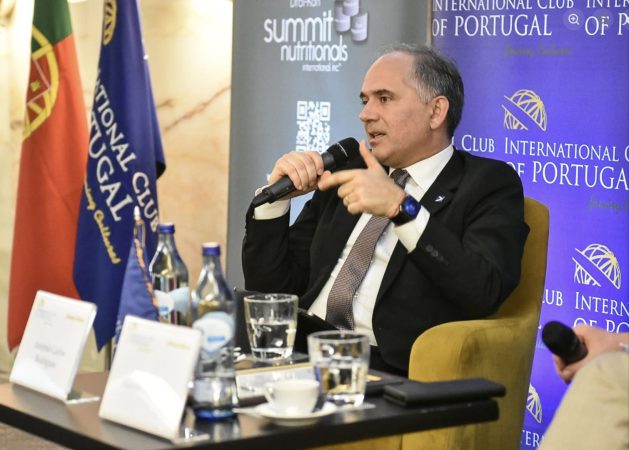
Affordable housing – A social investment
It’s no secret nationally or in international circles that Portugal, like many other countries in Europe, faces a chronic lack of affordable housing crisis.
“Therefore, I would say that construction is the infrastructure of infrastructures. And I think we have to see construction as a condition for development, in these various dimensions, not only economic but also social. There’s housing, industries, infrastructure, all of this originates from construction. And the problem we have, the housing shortage, is not a real estate problem, it’s a problem of lack of competitiveness”, he explained.
That meant that Portugal would be unable to build homes cheaply, efficiently and in a competitive and productive way until it adopted mass modular industrialisation of the essential building components of a property and then assemble them on site. In other words the time of the traditional building from scratch on a building site was over.
An unattractive sector
And continued; “we can’t attract people to the sector”. “When we talk about young people not being so interested in coming to this sector, I would say that the fault and responsibility doesn’t lie with young people. The fault lies with the sector, which hasn’t known how to change, and continues to do exactly what it did a century or two centuries ago, and little has changed. But I also think that when we talk about housing, one has to look at it as a social investment”.
Mr. Rodrigues believes housing is also a productive investment. A house located in the right place, with the right conditions, that allows a person to commute from work to home, has the conditions to live, to grow a family, ends up being the essential condition for it to also be a productive investment.
“We will not be productive if we don’t have all the other sectors with the capacity to attract and retain people”, he added.
“I see more and more companies. It happened about 150 years ago, when we lived through the Industrial Revolution, when we had companies like Vista Alegre, in Guimarães we also had one, which was the Cávado cardboard factory, that offered daycare and housing to people.
And that’s why we need that again, because of the widening gap being created between those who have and those who don’t. Once again, there is a need for companies that have to offer this social aspect, access to housing, which is one of the biggest concerns for public opinion”, said Mr. Rodrigues.
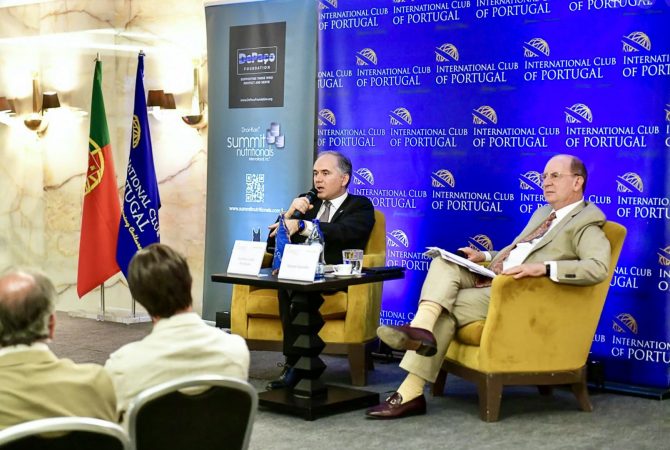
Can Portugal deliver big-ticket public infrastructure?
Mr. Rodrigues believes that there isn’t a lack of construction capacity in Portugal when it comes to delivering the new airport, the TGV and affordable housing for the middle classes.
“The issue is that we need to have a way of working, a delivery method that is appropriate to the scale of what we intend to deliver”, he said.
And often, the lack of capacity was attributed to a lack of manpower.
“We have to understand that our model in the sector, globally—it’s wasn’t just Portuguese, it was worldwide—has thrived on a single factor: maintaining low prices and delivery capacity. There’s always some country with cheaper labour, so we import cheaper labour. That’s the model that has held up for decades, all these years”, the CEO of Casais explained.
The simple truth was that there was no cheaper labour to find “unless we find it on Mars” – the model was exhausted and bringing in more cheap labour would not solve the problem in the long term.
“What happens to the Portuguese who don’t stay in construction also happens to the foreigner who comes here looking for a better life. They are most likely a climate refugee, a refugee from conflicts, an economic refugee, and so they seek to be in Europe.
“And from the moment they are in Europe, from the moment they are in Portugal, they look around and if there are other more attractive sectors, they quickly leave a sector (like construction) where they are always displaced (by even cheaper labour)”, he explained.
The real question was how could you achieve more with less work, less labour, and time, particularly in a country that doesn’t have sufficient birth rate to sustain the current population level?
The secret in the long term lay with increasing productivity and the way employment was dealt with in construction.
Construction – a fragmented sector?
The construction sector, said Mr. Rodrigues, may be a fragmented sector, but apart from the financial sector, was the largest in the world.
In other words, in terms of value and economic activity, if real estate, construction and the entire chain is taken into consideration, it’s the largest market.
“We can’t complain about a lack of market. But if we look at the differences between the various markets—I often make this comparison—our international presence gives us a very close insight into what’s happening on the ground in each country”.
The costs of construction
And the costs of construction varied wildly across countries and continents. In Portugal building costs lie in the region of €1,600 to €1,700 per square metre.
“If we go to the Middle East region, we can do it for €1,000. It’s cheaper. Cheaper because taxes are lower and we can attract labour from Asia – two large continents that are growing and create a large supply of qualified workforce to work in construction”, the Casais CEO added.
Therefore, the Middle East region was the one that lies between the West, between an American and European West, and an East that still has a considerable workforce. So, social action was also taking place there, because at the end of the day, economic value was being transferred between those who have and those who don’t. But it is, indeed, building a region, managing to construct an infrastructure that will last for many years and that will house many people.
But in terms of ever-rising construction costs, the outlook for the sector wasn’t a laughing matter and it was already becoming unsustainable to build homes for the average person.
“Costs will continue to rise at a rate of 8% per year” (cost of construction and manpower), so the answer lies in industrialisation.
Industrialisation of the sector – five changes
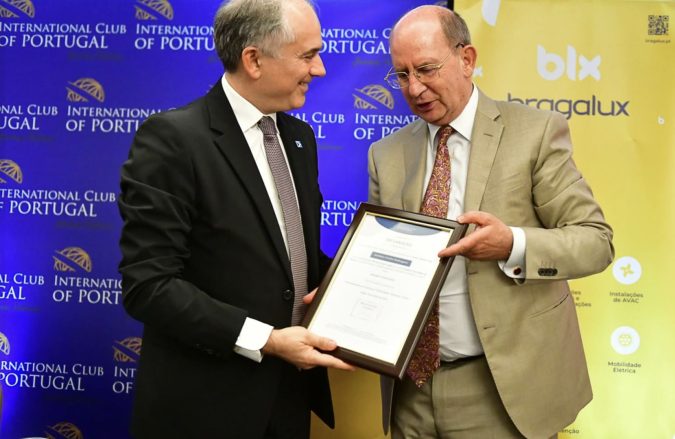
Industrialisation did not imply making buildings that all looked the same like the Soviet “Kruschevi” appartment blocks that sprang up in the Soviet Union in the 1950s and 1960s to deal with the housing crisis there at that time.
It meant building parts of a development in a controlled environment rather than on a building site.
“We’re talking about testing things out digitally before actually accurately assembling the pieces on site.
We’re not talking about a single factory where everything comes out. It’s several factories working in parallel, all using the same digital base. And then, yes, all the ‘Lego’ pieces fit together, even though they come from different factories. And that’s why we’re also talking about a more rigorous construction process, because the rigor has to be industrial rigor; otherwise, those pieces wouldn’t fit.
All this meant five essential changes: Shifting from a construction site environment to a factory; less improvisation and more planning; employing fewer isolated parts and more construction systems; less unskilled labour and more skilled labour.
“Because the truth is that the workforce we have on construction sites no longer have career progression. In the past we could still have people who started as labourers, became bricklayers, team leaders, and foremen. Those jobs no longer exist,” said Mr. Rodrigues.
“There’s no one who has spent 12 years in the sector learning step-by-step to reach the career of foreman. We know that we are training about 20 per year and that they are not replaced. Therefore, if we were to look at our capacity to execute work, it would quickly be exhausted, because these foremen are a dying breed, just like engineers”, he lamented.
Industrialised construction would allow for “the same work to be done in fewer hours” and increase productivity in the sector and that’s where the future lies for Portugal’s and indeed any country’s modern, sustainable and profitable construction sector concluded the CEO of Casais, António Carlos Rodrigues.