


Just how effective was Portugal’s General Strike?
Portugal’s General Strike on Thursday looked like a damp squib if the government’s opinion is anything to go by.
The Minister of the Presidency, Antonio Leitão Amaro said on Friday that the “majority of the country is working” and that electronic cash transfers through the SIBS payment system showed that transactions were only down 7% while traffic flows across Lisbon’s two bridges were only down 5%.
“The country chose to work and the adhesion to the strike was inexpressive, particularly in the private and social sectors.
However, the car plant Autoeuropa saw an effective total shutdown because of the strike. The company and the car parts supply companies that supply it at at Palmela Industrial Park suffered a complete stoppage with an adhesion rate among workers at 60% for Autoeuropa and between 80-90% at some factories supplying vehicle parts.
Yet on the causes of the General Strike (see Recommended International Club of Portugal article), António Leite Amaro stressed that the government would remain “open to dialogue” with unions and social partners.
“We respect those who exercise the right to strike, but we also know that the overwhelming majority of the country is working,” said Leitão Amaro, taking stock of Thursday’s general strike, on a morning when the Council of Ministers has been meeting since 9:30 am.
“We respect the right to strike and we always listen to those who exercise it. We will always maintain the same openness to dialogue that we have demonstrated in this process with various approaches, in the various meetings and encounters,” the minister continued in his statement to journalists. Emphasising the point of openness to dialogue, which “will always be maintained within a spirit of institutional respect”, Leitão Amaro said that this openness “was so evident” in the agreements reached with both the public service and the trade unions representing the private sector.
According to preliminary data adhesion to the strike overall was somewhere between 0-10% in the private and social sectors.
The CGTP and UGT called the general strike in protest against new labour legislation that the Government wants to get approved.
The preliminary draft “Trabalho XXI” was presented to social partners and unions on July 24 and provides for more than one hundred amendments to the Labor Code, including changes to fixed-term contracts (namely, extending the duration from two to three years and broadening the criteria that allow this type of contractual relationship), the return of the individual hour bank, and the end of the ban on outsourcing for one year after layoffs.
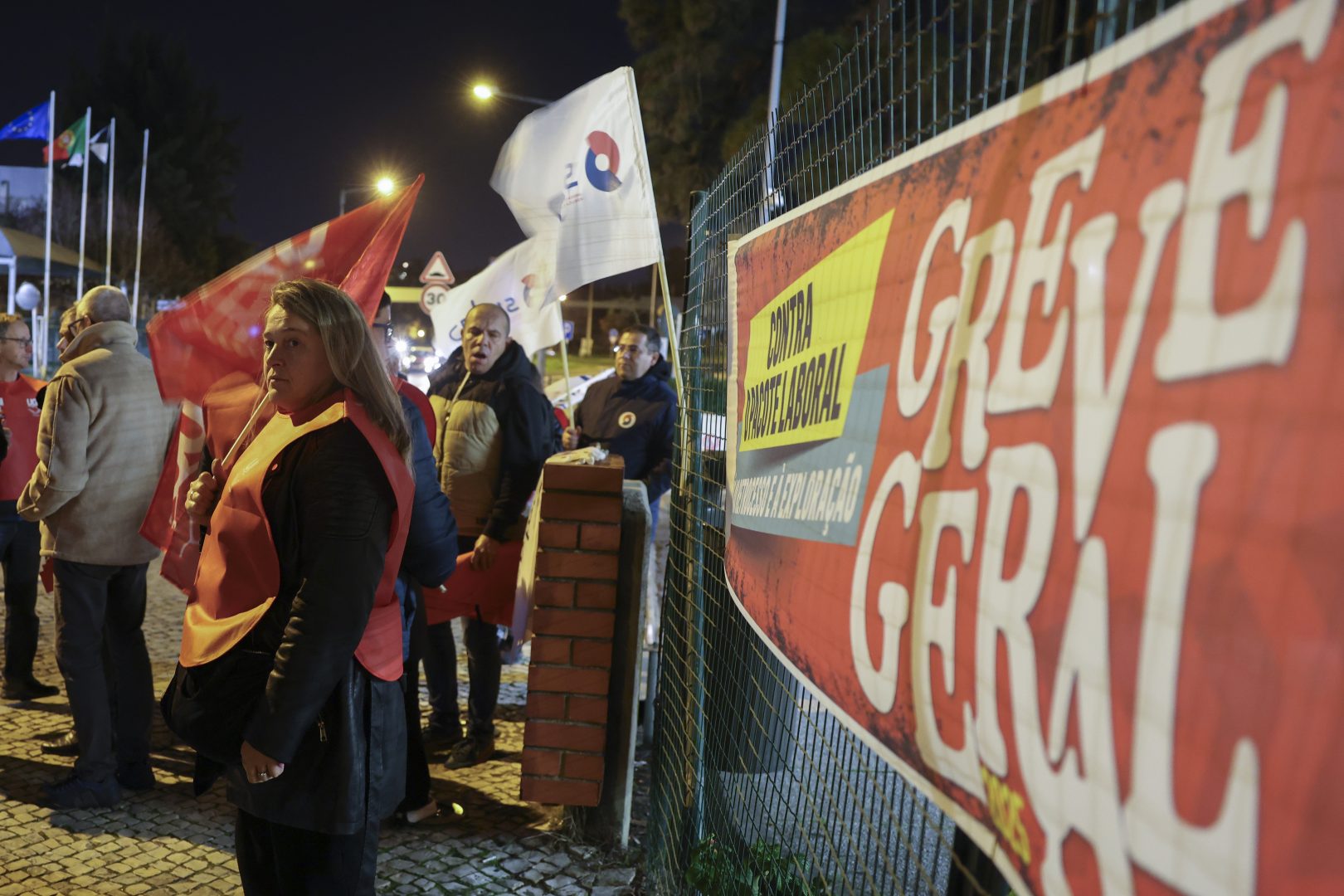
A Lisbon picket line outside Lisbon City Council’s Olivais Garage, December 10 2025. Thursday’s General Strike against the Government’s proposed Labour legislation reforms was the first major nationwide stoppage to involve the country’s main two unions CGTP and UGT since June 2013, a time when Portugal was essentially financially governed by a ‘troika’ of international lenders. TIAGO PETINGA/LUSA
Copyright: © 2025 LUSA – Agência de Notícias de Portugal, S.A.