


How AI could create a brave new world but not necessarily feature us
Text and Photo: Chris Graeme
Mankind could eventually lose control of artificial intelligence which could destroy us as a species.
And if that happened, the world would recover remarkably quickly and within the space of 10,000 years hardly any vestiges that our civilizations would remain on the planet with the exception, ironically, of Neolithic cave paintings.
This is one of the nightmare scenarios facing mankind from the adoption and continued development of artificial intelligence (AI) according to Doug Laney, a leading world expert in artificial intelligence and digital strategy, who gave a talk to members of the American Club of Lisbon at the Grémio Literário on Tuesday evening in Lisbon.
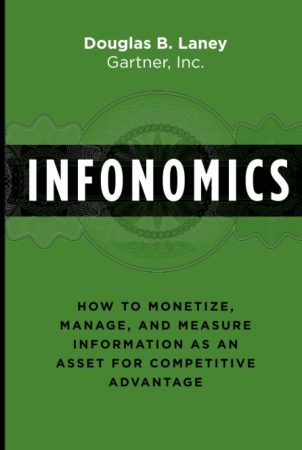
Doug Laney, a best-selling author of books such as Infonomics and Data Juice and a fellow of the University of Illinois, now lives in Portugal.

The thought leader, consultant, advisor, speaker, and instructor on data and analytics strategy topics was referring to the ‘AI Terminator Theory’ which alludes to the scenario popularised by the Terminator film franchise in which an advanced Artificial Intelligence (AI) becomes self-aware, views humanity as a threat to its existence, and initiates an existential war to destroy it.
However, for the foreseeable future, the immediate realistic risks include mass surveillance (already being used in China), misinformation (fake news) and job displacement.

Portugal – a “wonderful experience”
Doug’s book ‘Infonomics: How to Monetise, Manage, and Measure Information for Competitive Advantage’ was selected by CEO Magazine as the must-read book of the year and Doug is largely credited for having coined the term.
Doug and his wife Kenda (the founder and CEO of Laney Media and a prominent social media strategist and content creator) came to Portugal two years ago on a fact-finding mission.
They bought a house in Monte Estoril and decided to move lock, stock and barrel. “We love the culture, the people, and we’re trying to learn the language, and so far it’s been a wonderful, wonderful experience”, said the three times Gartner Annual Thought Leadership Award recipient who covered a wide range of areas in which AI could play a leading role in our lives and businesses.
After giving the audience a crash course in the various terminology that defines AI he points out that it’s too simplistic to define artificial intelligence as trying to replicate human behavior and, or human thinking.
AI covers Machine Learning (using data to identify patterns) also known as Data Mining, Deep Learning (Machine Learning that uses what are called neural networks that somewhat replicate the way that the brain works to analyse large amounts of data, again, for finding patterns), AI Chatbots (A large language learning model, model, typically for a specific purpose), and AI Agents (AI applications that are driven to perform a particular activity, not just respond with answers like ChatGPT. And these are just some of them.
And then there’s the more well-know terms or brands that are bandied about frequently such as ChatGPT, Gemini, Claude, Grok, Perplexity, and DeepSeek which are the ‘foundational’ models.
“There’s a whole host of AI-based tools and apps that are typically based on these foundational models that have applications for image and graphic generation, video and media creation, audio and speech, coding, productivity and workflow, customer service, marketing, and education”, Doug explained.
AI becoming “increasingly sophisticated”
Some may be familiar with AGI or Artificial General Intelligence whereby AI applications actually approximate human intelligence and could lead to Super-intelligence – a scary yet marvelous thought indeed.
“I’ve been studying and participating in AI for the better part of my career and I’ve been thinking long and hard about where AI is headed, particularly Agentic AI (Autonomous systems that go beyond generating content to proactively setting goals, planning multi-step workflows, and using tools to achieve outcomes with limited human supervision), and while I don’t really characterise these as degrees of maturity, they do somewhat reflect an increasing level of AI sophistication”, he said.
Doug gave the example of the application of customer support systems and context-aware agents that can handle ambiguity and complexity by analyzing historical data or real-time streams and unstructured information.
An example might be a system that analyses medical literature, patient records, or clinical data to assist with diagnosing or compiles known molecules to help discover new antibiotics.
“We have socially savvy agents that understand some human behavior, so they’re able to better interpret human emotions. I don’t think we’re entirely there just yet, but we’re starting to see some applications that can read behavioral signals from the tone and tenor of somebody’s voice when they’re communicating”, Doug explained.
Examples include apps used by CEOs on investor calls to identify stress, self-reflective agents that can analyse their own decision-making processes usefully for identifying inefficiencies (in industry, for example) determine the causes and fix them.
“Generalised Intelligence (GI) agents can span domains and are the kinds of agents that might be able to run your, entire business or coordinate other agents in running an entire business”, he said predicting that the world will soon witness the first unicorns operated by a team of as little as 10 people thanks to GI.
Beyond human intelligence?
And then there’s the prospect of entering the realm of science fiction in the form of super intelligent agents that go beyond human intelligence.
These are hypothetical systems that could surpass human intelligence in all domains. An example would be an AI that can discover cures for complex diseases, develop sustainable solutions for global challenges, solve incomplete models of quantum physics, or answer questions that we really haven’t even begun to answer.
AI applications could also be used in banking compliance against potential new laws that are coming out to predict when those new laws or regulations are going to be enacted and ensure that organisations are prepared.
“A lot of us are already using AI for different purposes and think that AI is cool. You can use it to search and learn and even plan vacations”, he said.
And then there are people with next to zero coding experience that are creating AI agents to generate new worlds, new business models and re-rewrite economic realities.
“The walls between what you know and what you’re capable of doing are really coming down fast, and that’s what these AI tools are enabling”, Doug added.
But Doug says that while this is all fun and informative for older people and the retired, it’s also important that young people really learn how to develop applications and use AI much more and more deeply.
And who knows? AI could be used to help us clean up the planet and undo some of the environmental damage that we’ve done over the past two centuries.
But equally, some time in the far future, AI could ultimately decide that mankind is the problem to ecological damage and come to the conclusion that it’s easier and beneficial for the planet to eradicate us as a species.
Sounds like science fiction? But it’s not beyond the realms of a very real and frightening possibility!