


Reforming Portugal’s State: the time for talking is over, the time for action is now
Text: Chris Graeme; Photos: Fernando Bento, ICPT
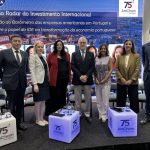
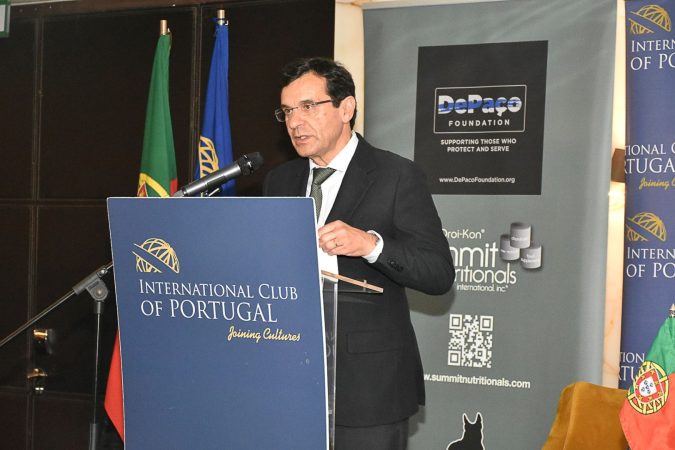
I must confess I didn’t know much about the guest speaker, Adalberto Campos Fernandes, at the lunch organised by the International Club of Portugal (ICPT) on Friday, other than he had been a Minister for Health during the António Costa socialist government.
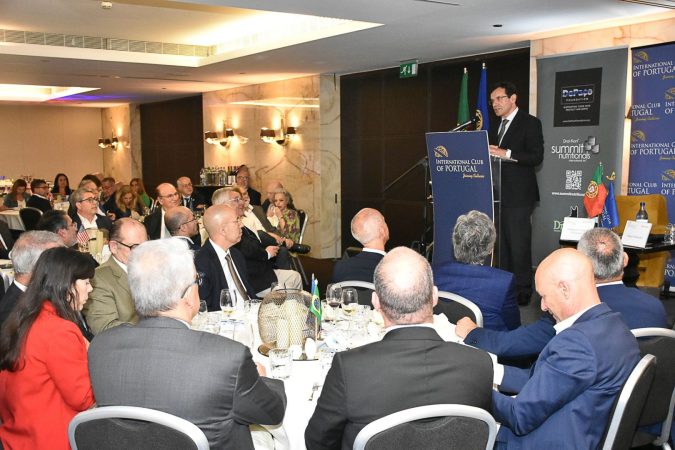
Yet it was suggested that I look behind the address ‘State Reform – Utopia or Inevitability’ by a media colleague, and that I should read the room and ponder why a Socialist Party crowd that usually doesn’t attend such lunches outside of elections was so in force.
First, the lunch was completely sold out, which is not the case of every lunch when election campaigns are not underway. Second, there were many tables there full of people I didn’t recognise. They came from different walks of life – from the public administration, various public and associative bodies and companies, and, of course from the ranks of Portugal’s Socialist Party, including MPs from Portugal’s parliament.
But what was equally interesting was the fact that many from other political parties were there too, in a rare coming together of forces of different ideologies and political persuasions – all united in one key idea – the State needs to be reformed.
Politics in play
It also seemed like a pack of supporters had assembled to honour one of its own and the feeling was that the current leader of Portugal’s PS socialist party, José Luís Carneiro, is not secure in his post for some, is not seen to be doing a good job by others, and that the party is clearly divided, and many of those unhappy with his tenure so far were in that room.
There were three conclusions to be drawn from that lunch. First, a group of disgruntled socialists are worried, worried about their sinecures that rely on whichever government is in power in Portugal; second, there is a creeping insecurity that the PS party will go the way of the Portuguese Communist Party (PCP) and left-wing Bloco da Esquerda party (Left Bloc) in losing influence, voters, and relevance – it’s members drawn away to the centre-right PSD party or split into a new party. In short, the left is disappearing.
In other words, what is happening to the PS party in Portugal is not unlike what has been happening to the Conservative Party in the UK where traditional conservative members and voters are joining the ranks of the populist Reform party. In Portugal, both traditional conservatives and traditional far-left voters and pitching towards the populist party Chega.
That means one thing. The two centre parties that have governed Portugal for its entire democratic history since the reintroduction of democracy in 1974 are losing ground, losing force, and losing the respect of their traditional voting bases.
Ordinary voters don’t see much difference between the two parties. There is a lack of confidence and a widespread belief that political parties in Portugal are not about serving the public, but serving themselves and their friends with jobs when elections are won.
The third conclusion was that this was an urgent gathering of the centre-left flock, a show of unity, a sense of we have to stick together, and there isn’t room for two centre parties in Portugal with similar or identical policies.
In short, there was a feeling that the beginnings of a Socialist Party galvanization for the next general election in Portugal in 2029 was underway in this very room.
Preparations were being made, loyalties being brokered and the feeling is that the party may not fight the election with José Luís Carneiro, but could even choose a younger man, perhaps the current PS coordinating leader in the former Portuguese dependency of Macau, Filipe Figueiredo, who was suggested to me as a possible future rising star, or perhaps Sofia Pereira who currently leads the youth wing of the party, but is still too inexperienced.
According to one journalist I spoke to, Macau is seen as very much a testing ground and springboard for future political leaders in Portugal. Those who win Portuguese party leaderships in Macau or served political functions went on to greater things in Portugal, both before and after the transfer of governance from Portugal to China in December 1999.
António José Seguro, now Portugal’s president, won the party leadership in Macau and other party grandees either ran the party in Macau or had strong links. These include former president and prime minster Mário Soares , Almeida Santos (a top figure after the 25 April Revolution 1974 who had business links there), and ex-PS Minister of Internal Affairs, Jorge Coelho, who was chief of staff to the Deputy Secretary of State for Social Affairs, Education and Youth of Macau (1988-1989) and, already in government positions in the same region, in the position of Deputy Secretary for Education and Public Administration (1989-1991). Personally, I would play down this link since other significant PS figures had no links to the former Portuguese dependency.
An expert in health
So, politics out of the way, back to the lunch’s speaker, Adalberto Campos Fernandes, a doctor and former PS health minister under Prime Minister António Costa’s government from 2015-2018 who used his expertise in diagnosis to suggest six cures for the ills assailing Portugal’s State machinery.
On the very day of the lunch, the man who had run several Lisbon hospitals, was appointed Coordinator of the Strategic Pact for Health by the recently inaugurated President of the Republic, António José Seguro.
But his talk was not about health and healthcare, it was about the need for the Portuguese State to Reform – an old chestnut that has been voiced for at least the 30 years that I have been living in Portugal.
Many governments, and the parties behind them, have joined academics, business associations, media commentators, and economists on the perennial question of State reform, ironically with the future of Portugal’s National Health Service being in the front line of such reform along with the legal system.
This current centre-right Democratic Alliance government has even created a Minister for State Reform, Gonçalo Matias, who has shown a very real commitment to such reform with several key policies underway.
But the current PS opposition has promised to be the most reformist government in Portugal should it win the next election.
That aside, Adalberto Campos Fernandes pointed out that the room was full of people from “diverse professional and political persuasions”.
United in friendship and consensus
“We are here simply united by a feeling of friendship, respect and a desire to think about the country on issues that have have more consensus than you would have thought,” he said. Indeed in the room was the former PSD leader and prime minister Pedro Passos Coelho.
“There are times in a country’s life”, he said, when a debate about the future “ceases to be a strictly ideological question and becomes an unavoidable collective necessity.”
“The discussion therefore takes on the dimension of a historical responsibility, which the present generation cannot fail to address. Reforming the State becomes essential to guarantee the collective future. We, who are older, must understand that it is one thing for this country not to be for the elderly, and quite another for this country not to be for the young”, he added.
He said, in the words of Max Weber, that the modern state is built on “rationality, predictability and the strength of rules”.
However, in Portugal this architecture was frequently “disfigured” by a tangle of procedures, many redundant, that blocked progress, or decisions made were surrounded by uncertainties.
And the quality of a country’s institutions often determined the vitality of its democracy, but in Portugal this quality was weakened and undermined by a lack of transparency and a difficulty in holding those responsible to account.
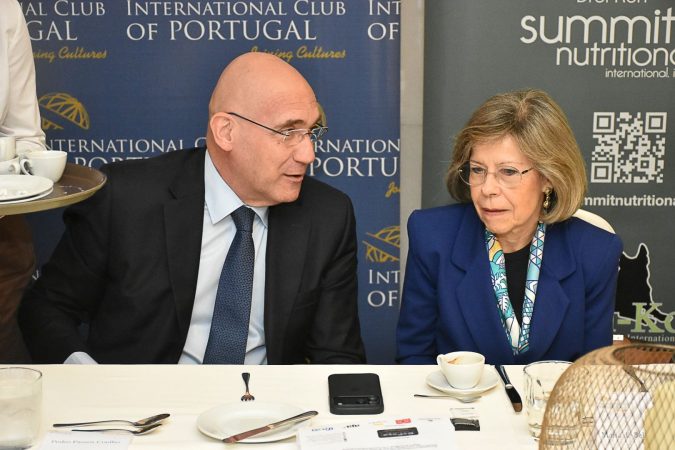
Photo: Former PSD Prime Minister, Pedro Passos Coelho with former PS Minister of Health, Maria de Belém Roseira.
Justice as fairness
And a just society was organised taking into account not just current actors, but those who would come in the future, as was set out by the political thinker John Rawls whose theory of “justice as fairness” recommended equal basic liberties, equality of opportunity, and facilitating the maximum benefit to the least advantaged members of society in any case where inequalities may occur.
Rawls’s argument for these principles of social justice used a thought experiment called the “original position”, in which people deliberately select what kind of society they would choose to live in if they did not know which social position they would personally occupy.
In his later work Political Liberalism (1993), John Rawls addressed the question of how political power can be exercised legitimately in a society where citizens hold diverse and often conflicting moral, religious, ideological and philosophical points of view.
By putting of reforms, accumulated blocks, and constraints, Portugal was undermining growth and transferring burdens to the next generations.
“What is at stake is a long-term vision for a country that urgently needs state reform to guarantee sustainable development. A vision that takes responsibility for our children and for those who have them, our grandchildren”, he said.
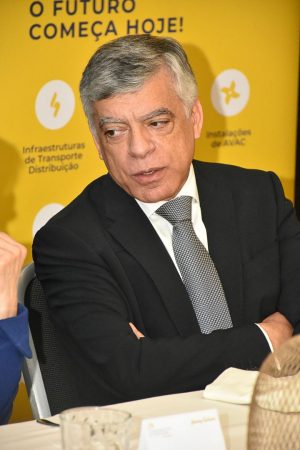
The President of Portugal’s business confederation CIP, Armindo Monteiro who was at the lunch, has his own struggle helping to reform outdated labour laws but is coming up against the unions.
Who blocks the present compromises the future
In the opinion of Dr. Adalberto Campos Fernandes, a state that blocks the present is compromising the future, and it is within this framework that Portugal had to be seen.
“Tomorrow we celebrate April 25th. Many of us in this room are children of April 25th, who were active in life as students, as professionals, and knew the importance that this date had in each of our lives. And Portugal, it must be said today, did not start from the same point in ‘1974 as its European partners”.
And Adalberto Campos Fernandes pointed out some of the absurdities of the current system that need urgent reform.
“When a simple request for authorisation for a teacher to use their own car for work-related travel requires bureaucracy, it shows that the problem is deep and widespread.
“Healthcare suffers from the same bottlenecks: slow public contracts, lack of autonomy for managers, and opacity,” he said.
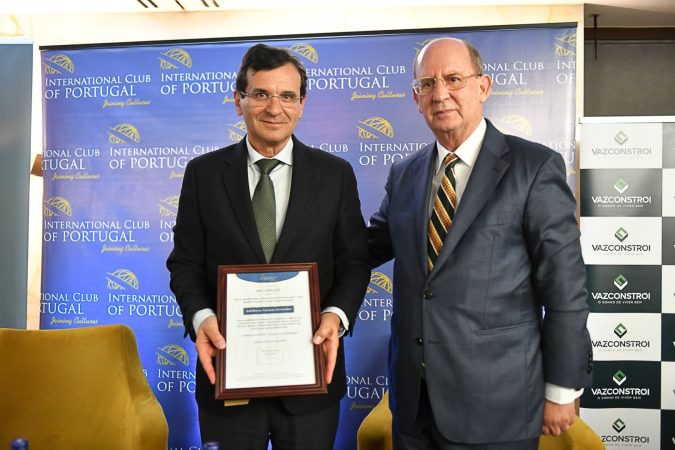
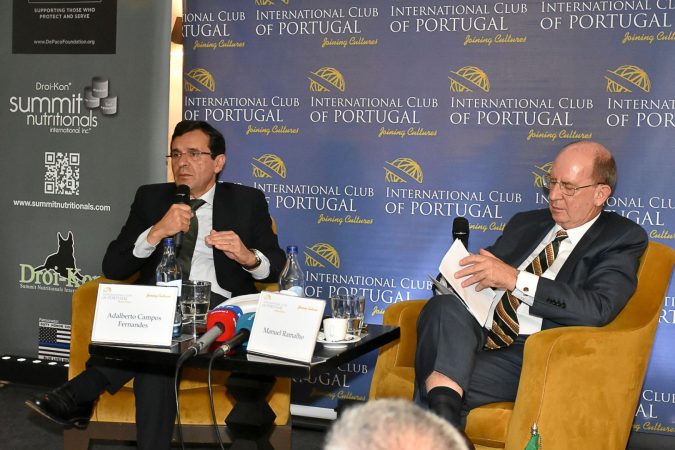
The speaker with the ICPT President, Manuel Ramalho
Progress made but opportunities lost
The former minister recalled that Portugal has improved significantly since 1976. At that time, the country had a GDP per capita between 50% and 60% of the European average, more than a quarter of the active population worked in agriculture, and the average schooling had been three to four years.
Today, these numbers had improved. But, he warned, convergence with Europe had been very slow. Since the beginning of this century, average productivity growth has been less than one percent per year, while in countries like Poland it frequently exceeds three percent.
“Hundreds of thousands of Portuguese have emigrated – many of them qualified young people. Our children are leaving and its our fault,” he lamented.
He conceded that things had changed and for the better. In 2006, GDP per capita is between 75% and 80% of the EU average. Agricultural employment has fallen to around 5% to 6%.
Average schooling is between 10 and 11 years. “Progress has been evident, but convergence has been very slow if we compare this with Ireland, which went from levels close to ours in the 1980s to values well above the European average, albeit with the statistical effects associated with the very strong presence of multinational companies”, he added.
Doing more with less
Spain is currently approaching 85% to 90% of the average, Germany is above 120%, and Portugal, in this aspect, as in so many others, had “fallen short”.
“We have been in the European Union since 1986. Since then, we have received €170Bn to €180Bn and with the current Recovery and Resilience Plan and others, this amount is approaching some €200Bn.
However, with the RRP plan coming to an end, and the prospect of Portugal receiving less EU subsidies on the horizon, Portugal would be faced with the prospect of having to “do more with less.”
Dr. Campos Fernandes was quick to explain that it wasn’t about advocating austerity, but rather efficiency.
Portugal spent a percentage of its GDP on public health that was above the European average, but the results were worse.
More than 1.7 million Portuguese people didn’t have a family doctor, waiting lists were growing, and public spending was increasing at an unsustainable rate.
“We have levels of inefficiency that I dare say are among the five worst in Europe,” he stated.
Limited structural results
The same problem existed in the justice system, where civil and commercial proceedings take years, and in public administration, where companies face more time, more steps, and more regulatory uncertainty than in other comparable European economies. “The problem isn’t the level of spending – it’s the way it works,” he lamented.
For various periods, EU funding had represented between approximately 2% and 3% of GDP. It enabled Portugal to build thousands of kilometers of road infrastructure, expanded access to education, modernised public facilities, but the structural results were very limited.
In the mid-1990s, Portuguese productivity was between 60% and 65% of the average of the most developed OECD economies.
But the country had failed to make structural changes. Portugal has lost relative ground to its competitors. The average salary in Portugal today stands at between €1300 and €1500 gross, according to the calculation criteria adopted by the INE (National Institute of Statistics) and Eurostat.
In the European Union, in many countries, that same salary was over €2000. A structural difference of about 30%. Approximately 20% of Portuguese workers earned low wages, compared to 14% on average in the European Union.
And looking at the President of the Industrial Confederation of Portugal (CIP), Armindo Monteiro, he alluded to the emigration en-masse of Portugal’s best and brightest, leaving overseas where the pay and opportunities were better.
“The economy does not fully absorb these qualifications. Our children leave. The most technologically intensive sectors still represent a much smaller fraction of the best examples in Europe”, he said.
Dr. Campos Fernandes admitted the Portuguese were living longer (from 68 in 1976 to 81 today) but were not living better.
And in justice, civil and commercial cases frequently took many years to resolve, particularly in complex cases, leading to costs and uncertainty (and certainly not good for investors’ confidence).
Licensing processes took months and even years. In some countries, these timeframes were significantly shorter.
“Bureaucracy compromises the functioning of the state. Investment projects can sometimes involve dozens of entities. Companies report significant administrative costs, and international estimates point to hundreds of additional hours of bureaucratic obligations for small businesses”, he stated.
Regarding European funds, Portugal showed reasonable levels of execution, but the assessment of the economic impact remained very limited.
Countries like Poland had channelled a very significant portion of EU funds towards strengthening industrial and export potential. Portugal has focused more on investment, and the results reflected these choices.
Regional inequalities
Regional inequalities had worsened, with more than half, around 60%, of economic activity concentrated on the coast. (Porto, Lisbon, Setúbal and the Algarve)
Some inland regions had lost a significant portion of their population in recent decades, in some cases exceeding 30%. And the population density in certain territories was less than 20 inhabitants per square kilometer.
Asymmetries persisted. In short, although Portugal had improved significantly since 1976, since the beginning of the century it had converged slowly, with data pointing to a consistent pattern of moderate growth, limited productivity, low wages, and persistent institutional bottlenecks.

The Minister for State Reform, Gonçalo Matias is already carrying out an ambitious State reform overhaul, but it is too early to say how successful it will be.
Six solutions
Dr. Campos Fernandes offered six concrete ideas or solutions. First, he proposed administrative simplification (the current government is actually tackling that), reducing redundant procedures by about thirty percent.
Second, he advocated for real transparency, with public contracts and financial execution available to any citizen.
Third, he called for faster economic justice, recalling the case of an acquaintance who has lived for ten years under indictment for a crime he claims he did not commit.
Fourth, he demanded results-oriented public management, with clear and measurable indicators.
And fifth, he warned of the need for territorial cohesion, combating the asymmetries between the coast and the interior. And he left a warning: “reforms are not announced, they are made, evaluated and discussed after they are done”.
Last, he called for the elimination of duplication, or in some cases triplication, whereby up to three different entities overlapped in competencies in trying to achieve the same things.
But actually, it seems to me that Portugal’s political parties need to work together, put aside ideological differences, bring in all agents of society from unions and business organisations to private and public bodies, entities and think tanks to assist in rebuilding the crumbling and rotten edifice of State machinery from scratch.
This would take a decade. Perhaps a cross-party government of national reconstruction is what is required and, in that time, a suspension of elections. Perhaps former PSD leader Manuela Ferreira Leite was right after all! But would it work? As the Romans allegedly said: “The Lusitanians can’t govern themselves and won’t be governed.”