


Challenges and prospects for Portugal’s real estate sector – is the sector witnessing a new cycle?
Text: Chris Graeme; Photos: Joaquim Morgado (Colorshop)
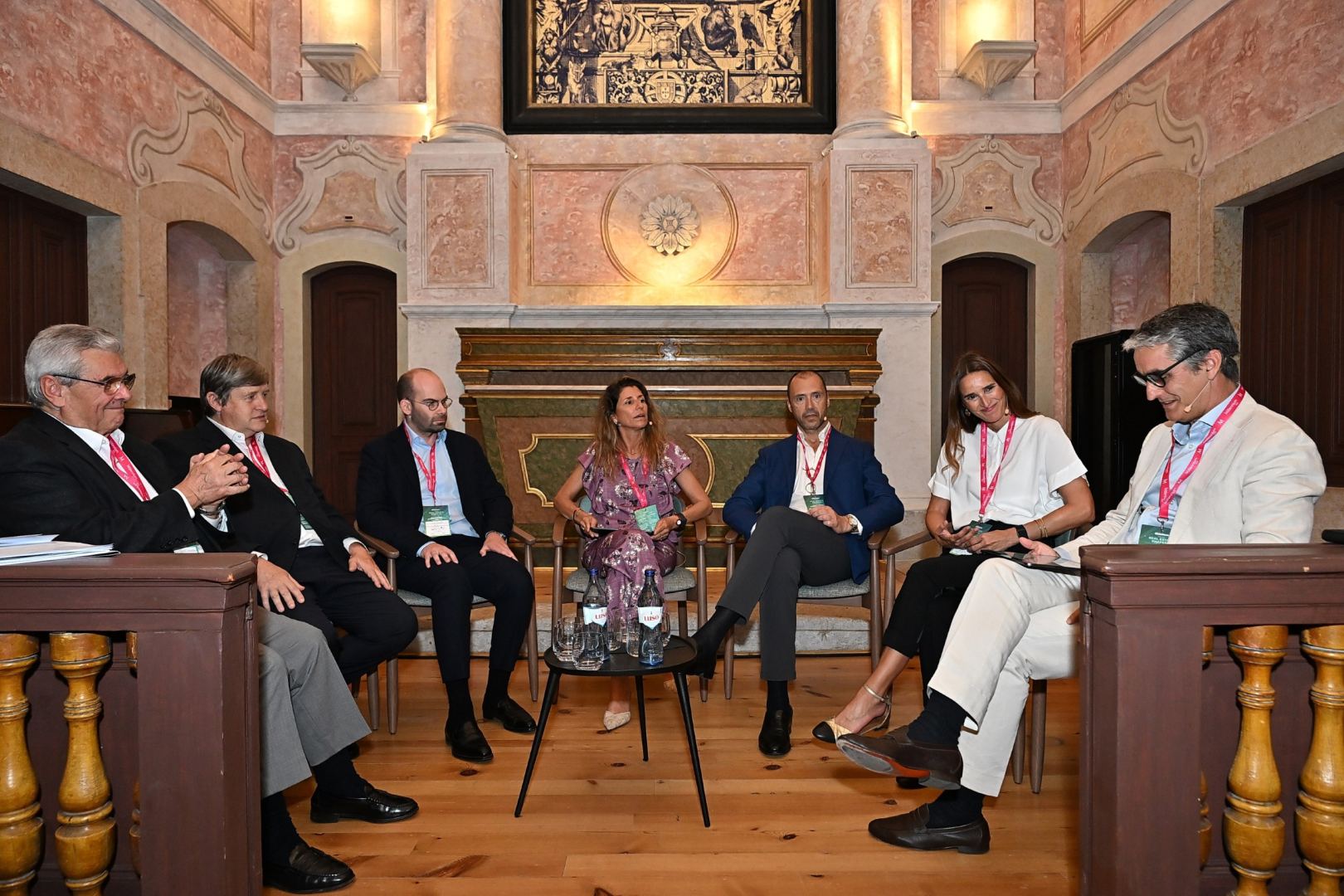
Movers and shakers in Lisbon’s real estate sector debated the current state of Portugal’s commercial and residential property market in late May at the 3rd edition of the Real Estate Shapers conference organised by Magazine Imobiliário.
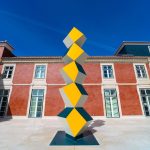
Held at the Armando Martins Museum of Contemporary Art (MACAM), the experts concluded that the market was not likely to suffer a significant downturn but suggested that the next few years would be dominated by growing demands, pressure on the construction sector, and continued difficulties in meeting demand, especially in the affordable residential housing sector.
Residential market slowdown but no collapse
Patrícia Barão, President off the Portuguese Association of Estate Agencies and Estate Agent Professionals (APEMIP), said that a slowdown in house prices in Portugal was inevitable after the strong growth seen in recent years, and pointed out that 2025 has seen both price and sales records made in Portugal’s residential housing sector with around 160,000 homes sold and €40Bn invested in housing of which 95% were Portuguese and 5% were overseas buyers.
The APEMIP president also noted that of the €40Bn in house purchases, around €20Bn was financed through bank mortgages and that this model was working well, which meant there was supply to keep the market buoyant.
However, she warned: “We don’t have an unlimited market; we won’t continue to see these house prices increasing at the same rate. I think we’re going to reach a point (when they level out) but I don’t think it’s a change in the cycle”.
The days of ‘everything goes’ is over
Benedita César Machado, Head of Real Estate Sales, Marketing & Communications Officer at Arrow Global, said the “phase of everything goes” was over and noted that clients were becoming more informed and choosy and would no longer accept any real estate product at any price.
And the imbalance between supply and demand continued to be a reality. “We continue to feel runaway prices. If we look at the logistics side, the investment component continues to be our main buyer with 70% to 80% of our clients.
“What we feel is that when clients come to visit one of our projects, they are much more demanding in the questions they ask. They are no longer willing to pay for everything at any price, and they also have access to perhaps much more information.
“I think that also demands much more from us, as professionals, regarding the product we develop. Of course, we still have all the other challenges – the construction and land costs that remain high”, she added.
Inconsistent government housing policies
Despite continuing demand, the experts warned that Portugal’s residential housing market was unable to meet the current demand while lamenting that the sluggish and overcomplicated planning permission processes in the country were hampering both developers and investors.
Joaquim Lico, CEO of Vogue Homes, criticised the lack of continuity in public policies and warned of the absence of structural responses from the public administration. “As long as there isn’t a comprehensive vision for the sector and what affects it, we won’t be able to find solutions,” he stated.
Portugal’s skilled labour works abroad
Nuno Santos, director head of Portugal for the REIS Group, anticipated a “more challenging” phase for the national real estate sector and considered that the licencing problem will hardly improve in the short term. He also warned of the continuous exodus of skilled labor from the Portuguese construction industry.
Regarding developers, he said: “I think we’re going to enter a different and more challenging cycle. From my experience, licencing isn’t going to improve and policies are always changing which isn’t good for the sector.
“The other thing that worries me is the lack of labour. We’re seeing construction firms increasingly focused on large projects linked to the Recovery and Resilience Plan (Portugal RRP) with an increasing lack of interest in doing medium scale projects which leads to increasingly complex negotiations with developers”, he said.
Immigration, he said, was a topic that was increasingly political, and Portugal’s political parties used it to their advantage.
“That doesn’t help this sector. For example, we have a significant presence in Geneva, Switzerland where we have one of our largest projects currently under construction. The workers almost only speak Portuguese since 90% of the workforce on this project are Portuguese” said Nuno Santos inferring that Portuguese construction workers worked in Switzerland because the wages were better.
“What we feel is that the most qualified workforce in construction has left and is leaving more and more. This will also cause a depression in construction costs.
On the rental side, the construction boss agreed that there was demand for rental housing.
“The market is strong but the reduction in the affordability ratio, an environment with more inflation will certainly come, and will cause a depression in rental prices. I think the market will show a positive response, but with more caution”, he advanced.
Enough labour to build Portugal’s new airport and TGV?
The shortage of human resources ended up permeating practically the entire conference. José Araújo, central director – real estate divestment at Millennium bcp, considered that the “lack of manpower represents one of the main constraints of the sector today” and warned of its added impact for large public works projects in the coming years, such as the new airport or the high-speed rail (TGV).
Faced with this scenario, industrialization and modular construction have repeatedly emerged as part of the response to increase the productive capacity of the national construction industry.
“I don’t think we’re entering a new cycle. I think what has been changing – and this is normal over time – are various aspects and constraints surrounding the real estate market. Right now, the main problem for everyone is labour. It’s not expensive credit, nor the licencing. I honestly think that some municipalities are already under much greater scrutiny and are working much more closely with developers (to speed up licensing). “I’m not talking about Lisbon or any other city in particular, but as always, it’s the municipalities around the major cities and other district capitals that are functioning”, he said.
The problem for José Araújo was the workforce. “The workforce is scarce. The workforce learned from France, with the Olympic Games, to internationalise, because that was the big debate about the workforce at that time, and it continues now with the same promoters and different representatives.
“We’ll see with the increase in fuel prices if they’ll be able to keep working abroad, because they had (cheap airline) tickets for €20, €30, and every weekend they went to Paris. I doubt that with the prices now that they can continue to do this. But when public works begin in Portugal (the airport and high-speed train) the contractors will obviously prefer long-term projects to smaller ones”, he said.
Modular construction is the future
The technological and environmental transformation of the sector also dominated the first panel of the conference, moderated by Carla Celestino, director of Magazine Imobiliário.
Miguel Garcia, general manager of Garcia Garcia, argued that offsite construction, industrialisation, and robotics represented an answer to the scarcity of labour, natural resources, time, and productive capacity. “Construction must modernise and evolve,” he stated, while also highlighting the reduction of waste, greater quality control, and improved operational efficiency.
“This imbalance between supply and demand continues to be a reality. We continue to feel runaway prices. If we look at the logistics side, the investment component continues to be our main buyer with 70% to 80% of our clients.
Ana Lisboa, a specialist technician from the Industry and Energy Transition Directorate of ADENE – the Portuguese Energy Agency, warned of the challenges of the energy transition and the risk of loss of competitiveness for Portuguese SMEs in the face of less demanding markets from an environmental point of view. She advocated for greater coordination between public policies, innovation, and industry, at a time when many companies are still facing difficulties adapting to the new European targets.
Bruno Borges, Leader Portugal of LIXIL Europe, also drew attention to the impact of the new European Drinking Water Directive (DWD) on the construction sector, arguing that buildings will have to meet regulations by introducing features related to water efficiency and quality.
Artur Varum, CEO of Civilria, highlighted the role of architecture and urban projects in the transformation of cities and the enhancement of urban spaces.
In the closing session Manuel Maria Gonçalves, CEO of APPII – the Portuguese Association of Real Estate Developers and Investors, reinforced the role of the private sector in responding to the country’s housing needs and advocated for greater construction and investment capacity to meet existing demand.
The panels comprised: Benedita César Machado, Head of Real Estate Sales, Marketing and Communications at real estate development and investment fund Arrow Global; Patrícia Barão, President of the Portuguese Association of Estate Agencies and Estate Agent Professionals (APEMIP); Joaquim Lico, CEO of premium residential developer Vogue Homes; Nuno Santos, Director and Head of Portugal at Grupo Reis, a real estate investment firm; José Almeida Guerra, CEO of architects and architectural project managers Rockbuilding; José Araújo, Director of Real Estate Divestment at Millennium bcp; Miguel Garcia, General Manager of construction firm Garcia Garcia, Ana Lisboa, Head of Industry & Energy Transition at the Portuguese Energy Agency (ADENE); Bruno Borges, Leader Portugal of household water products company LIXIL Europe (Grohe); Artur Varum, CEO of property developers Civilria; and Manuel Maria Gonçalves, CEO of the Portuguese Association of Property Developers and Investors (APPII). The panels were moderated by Carla Celestino (Moderator), Director of Magazine Imobiliário and Pedro Lancastre (Moderator), CEO of DILS Portugal.