


Renewables association warns of lost investments over eolic auction delays
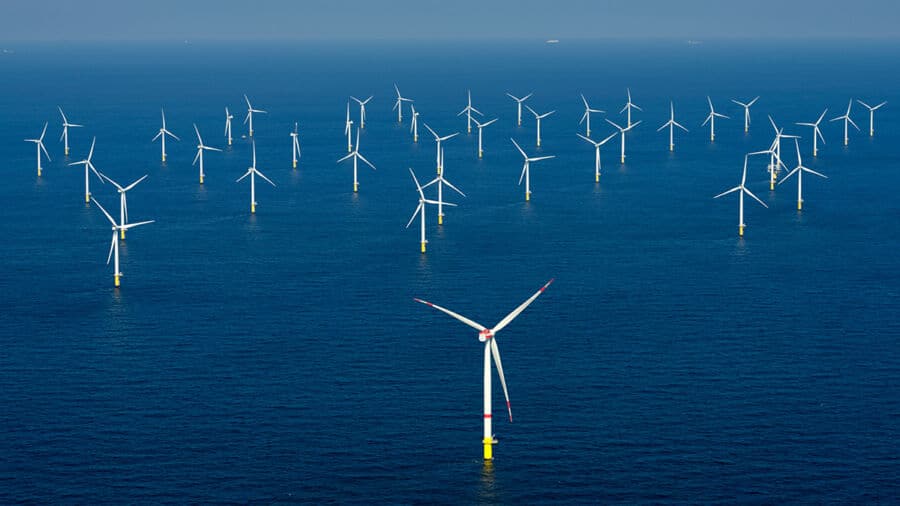
The Portuguese Renewable Energy Association (APREN) has warned that Portugal could lose out on major investments because of continued delays in offshore wind turbine auctions.
Wind energy represented 25.4% of energy production in 2025 but if Portugal is to reach its renewable energy transition targets it must speed up international competitions through auctions to sell the rights to build, operate and generate power from offshore eolic wind farms.
In statements to the news agency Lusa, regarding the report ‘Wind Farms in Portugal’, released on World Wind Day, the coordinator of Policies and Market Intelligence of the Portuguese Renewable Energy Association (APREN), Susana Serôdio, said that there continues to be interest from developers in offshore wind power.
The report, prepared by INEGI – Institute of Science and Innovation in Mechanical Engineering and Industrial Engineering – in partnership with APREN, points to a wind power production of 13.5 terawatt-hours (TWh) in 2025, equivalent to 25.4% of electricity consumption in mainland Portugal.
When questioned about the offshore wind auction, which has suffered delays, Susana Serôdio stated that there continued to be “considerable contact with some companies that expressed interest from the start,” but admitted that the first projects are only expected to emerge after 2030, even if the process moves forward quickly.
“If things were expedited and if, in the meantime, there were a procedure and a timetable, we would probably only see the first projects after 2030,” she stated, pointing to “the beginning of 2030, 2031, 2032.”
For Susana Serôdio, the delay in launching the auction could cause Portugal to miss a window of opportunity, at a time when other markets are positioning themselves.
“By delaying this decision, while other markets position themselves, we may be losing investment that could come to national projects and that will end up going to others, as well as some of the value chain linked to offshore wind,” she stated.
Source: ECO