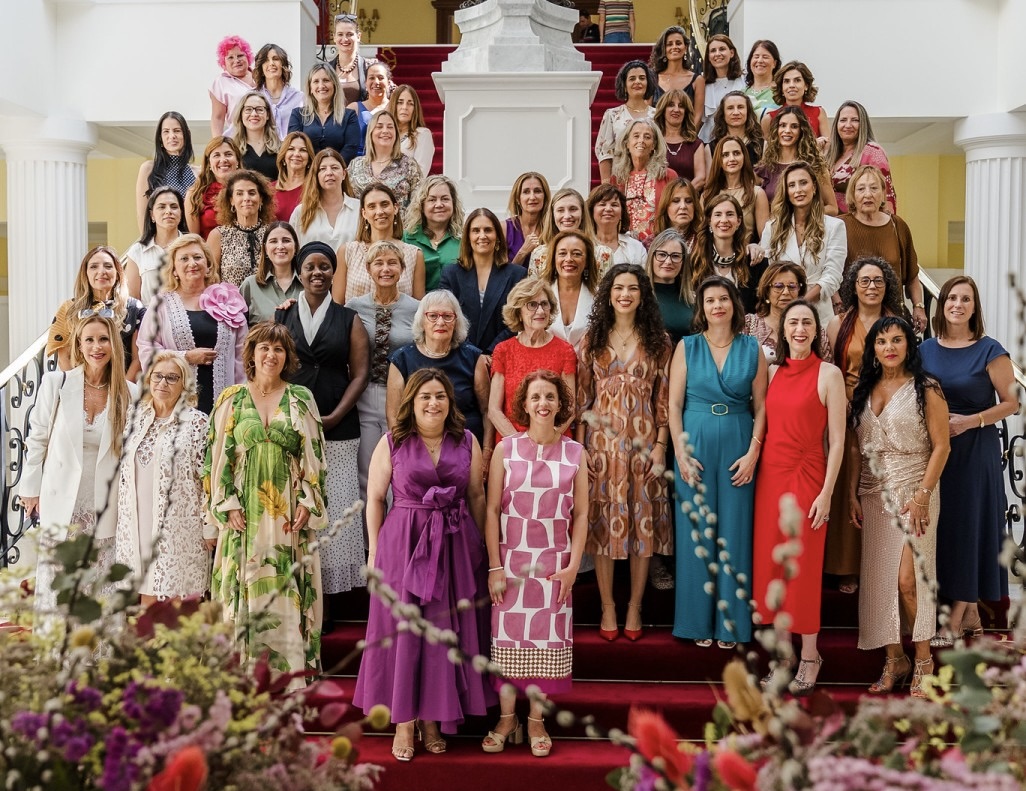



Ladies who do tea and business – Portuguese women executives build links in Middle East
Portuguese women executives are forging business links in the Middle East through the Executive Tea Club.
The Executive Tea Club – ladies’ business club which currently has over 500 members – has arrived in Dubai and Bahrain.
The club connects Portuguese businesswomen with established leaders in the Middle East, supporting the internationalisation of Portuguese companies, promoting national brands, developing partnerships, opening doors to new markets, showcasing knowledgeable women, and redefining business concepts.
These are some of the opportunities identified by the Executive Tea Club within its ongoing internationalization strategy. It currently maintains an active presence in Dubai (United Arab Emirates) and Bahrain.
In Dubai, the ETC ambassador “helped the hub to develop by forging closer links on the ground and fostering a greater understanding of the market,” while in Bahrain, her Portuguese counterpart “is building a qualified, international network of women aligned with the community’s values,” explains ETC co-founder and entrepreneur Raquel Mota Pinto.
Cosmopolitan diversity
According to her, these two locations represent far more than just markets with growth potential; they embody “a way of looking at the world”—one defined by ambition, openness, creativity, and “the courage to transform the seemingly improbable into the possible.”
“These are cosmopolitan, multicultural markets with a strong presence of expatriate women—entrepreneurs, investors, executives, and professionals of various nationalities.
This diversity is fully aligned with the Executive Tea Club’s mission to build bridges between cultures, businesses, and geographies,” she adds.
Bringing together top-level professionals for three years, this women’s networking community began with 28 executives; after more than 50 sessions, it now has over 530 members—including board members, managing directors, managers, CEOs, consultants, doctors, lawyers, accountants, and specialists in finance, technology, real estate, communications, education, healthcare, diplomacy, hospitality, tourism, culture, politics, and the creative industries.
All are united by a shared vision: “leading with sophistication, consciousness, influence, and impact,” as Raquel Mota Pinto emphasises.
Currently, the Executive Tea Club has active hubs in three districts (Porto, Lisbon, and Aveiro), but aims to expand the concept and engage senior executives and businesswomen in cities across all 18 districts.
Its presence in the Middle East, the network’s founder notes, was made possible “thanks to women with local knowledge, cultural sensitivity, and strong ties to business communities.”
New app
Alongside its ongoing expansion strategy, ETC has already strengthened the bonds between its female members with the launch of an app (for Android and iOS) during its third anniversary celebration in June.
Bilingual (in Portuguese and English), the app facilitates remote communication between executives and has features that allow them to share business opportunities and request specialized help from the various professionals who are part of the community, in addition to a digital library on different topics: leadership, management, communication, marketing, artificial intelligence, finance, personal development, and networking.
“Our app allows us to get to know each other better, enabling us to identify areas of expertise, interests, goals, and affinities, keeping alive the connections initiated at events. It is a technological extension of the community and a space for free and conscious connection,” says Raquel Mota Pinto.
Inspired buy a queen
Each Executive Tea Club session takes place in exclusive, carefully selected settings where the tea ritual—inspired by Queen Consort Catherine of Braganza—is imbued with details, atmosphere, and beauty that invite one to pause.
The invitation to share a meal—while also absorbing insights from an expert—offers a way to “slow down the corporate pace and make room for substantive conversations, genuine alliances, and strategic decisions made with clarity, less noise, and greater impact,” as the founder notes. She also highlights the “encouraging signs” regarding the evolution of female leadership in Portugal.
“There has been progress in the proportion of women serving on the boards of publicly traded companies. That figure has more than doubled over the last eight years and now stands at nearly 37% representation—thanks, in part, to the implementation of quotas in this corporate sector. Progress has also been gradual in other areas of the business world,” comments Raquel Mota Pinto.
Breaching the glass ceiling
According to data from the European Institute for Gender Equality, Portugal is among those countries that have made the most progress regarding female representation on the management teams of listed companies (rising from 8.2% to 17.4%, a 112% increase over nearly a decade).
Despite these improvements, the national landscape remains unbalanced in terms of strategic decision-making roles. Last year, according to the institute dedicated to gender equality in Europe, Portugal ranked seventh lowest out of 30 countries for female representation in executive management positions.
These are statistical trends that the ETC is working to improve through a strategy of empowering women one by one, initiative by initiative. It is also an effort to dismantle—as Raquel Mota Pinto emphasises—the primary obstacles facing female executives, which stem from a combination of structural and cultural barriers: the pay gap in top-level roles, work-life balance challenges, the low uptake of part-time work in the country, and unconscious biases affecting career progression. All of this is achieved through the ability to build connections, influence others, and foster trust—driven by communication and strategy.
Source: ETC